Home / World News / Ozone layer not healing as fast as expected, surface UV radiation rising
Ozone layer not healing as fast as expected, surface UV radiation rising
The researchers noted that continuous monitoring of ozone and UV radiation levels is important to better understand why ozone recovery is delayed and whether this trend will continue
The ozone layer is not healing as quickly as expected, leading to higher levels of surface ultraviolet (UV) radiation in recent years, according to a study.
Despite projections that the ozone layer would fully recover by mid-century, researchers found rising UV radiation levels in the tropics and northern mid-latitudes after 2010, posing risks to human health and the environment.
"Our analysis shows disturbed ozone levels and enhanced surface UV radiation for more than a decade after 2010," said study lead author Yan Xia of Beijing Normal University, China.
"The slower recovery of stratospheric ozone is largely unexpected," Xia said in a statement.
The study, published in the journal Advances in Atmospheric Sciences, analysed satellite data and model simulations to assess long-term changes in ozone and surface UV levels around the globe.
"We observed a decrease in ozone levels and an increase in UV radiation over latitudes between 30 degrees South-60 degrees North after 2010," Xia said.
"Especially in the Northern Hemisphere, the rising magnitude of surface UV radiation from 2011 to 2020 reached 0.5-1.4 per cent per yearthis should not be neglected," he added.
The researchers noted that continuous monitoring of ozone and UV radiation levels is important to better understand why ozone recovery is delayed and whether this trend will continue.
Policymakers and the public should be aware of and prepare for the harmful effects of enhanced surface UV radiation on the environment, agriculture, and public health, they said.
The findings are a sobering reminder that ozone layer restoration is a complex process affected by factors like global warmingand full recovery remains uncertain.
Continued research and implementation of policies like the Montreal Protocol -- a treaty designed to protect the ozone layer by phasing out the production of numerous substances that are responsible for its depletion -- are critical to reverse this worsening trend, reducing UV exposure, and protecting life on Earth in the coming decades.
(Only the headline and picture of this report may have been reworked by the Business Standard staff; the rest of the content is auto-generated from a syndicated feed.)

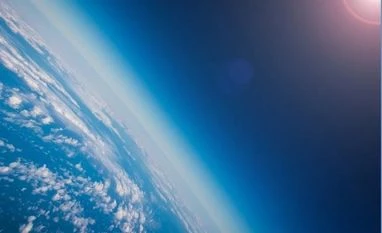 "Ozone layer not healing as fast as expected, surface UV radiation rising")


 Connect with us on WhatsApp