'Planet Killer': All about mountain-sized asteroid that flew close to Earth

On June 27, a mountain-sized space rock "Planet Killer" made a close approach to Earth. One of the largest potentially hazardous asteroids had a diameter of 2.5 kilometres, according to estimates
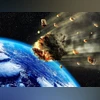
asteroid
A number of large space rocks hurtling through the solar system will be approaching planet Earth in comparatively close range in June 2020. Representative photo: Shutterstock
Sonika Nitin Nimje New Delhi
2 min read Last Updated : Jun 28 2024 | 3:56 PM IST
On Thursday, June 27, a mountain-sized space rock passed close to Earth, at about 5 million miles. 2011 UL21, also known as the "Planet Killer," was one of the largest asteroids to ever come this close to the blue planet.
The stellar rock, which is known as 2011 UL21, had a massive width of 1.1 to 2.4 miles (1.7 to 3.8 kilometres) and passed Earth at a speed of approximately 58,000 mph (93,000 km/h).

‘Planet Killer’: All about a Mountain-sized asteroid that passed Earth

The enormous space rock, which orbits the sun every three years, was first discovered in 2011. The European Space Agency says that it is bigger than 99.99 per cent of the asteroids that are known to be near Earth. 
It will still be 17 times further away from Earth than the moon, despite coming within 4.1 million miles.
2011 UL21 isn't projected to collide with Earth. Nonetheless, it momentarily had a 1 in 1,000,000 possibility of hitting our planet in 2029. 
However, on November 2, 2011, the probability decreased to 1 in 71 million. NASA's Jet Propulsion Laboratory says that the asteroid, which has an absolute magnitude of 15.8, is also one of the brightest.

Scientists say the ‘Planet Killer’ poses no threat!

Regardless of its size and closeness, the space rock flew at a distance of around 4.1 million miles (6.6 million km) from Earth, multiple times farther away than the moon–a safe vicinity that offers no danger to Earth, either now or in the future, according to the European Space Agency (ESA).
But, NASA classified it as a possibly unsafe object, featuring the space rock's capability to cause continental-scale harm if it somehow managed to hit Earth, and its most likely possibility of delivering debris into the atmosphere while passing by that could set off significant climatic changes.
*Subscribe to Business Standard digital and get complimentary access to The New York Times

Smart Quarterly

₹900

3 Months

₹300/Month

SAVE 25%

Smart Essential

₹2,700

1 Year

₹225/Month

SAVE 46%
*Complimentary New York Times access for the 2nd year will be given after 12 months

Super Saver

₹3,900

2 Years

₹162/Month

Subscribe

Renews automatically, cancel anytime

Here’s what’s included in our digital subscription plans

Exclusive premium stories online

  • Over 30 premium stories daily, handpicked by our editors

Complimentary Access to The New York Times

  • News, Games, Cooking, Audio, Wirecutter & The Athletic

Business Standard Epaper

  • Digital replica of our daily newspaper — with options to read, save, and share

Curated Newsletters

  • Insights on markets, finance, politics, tech, and more delivered to your inbox

Market Analysis & Investment Insights

  • In-depth market analysis & insights with access to The Smart Investor

Archives

  • Repository of articles and publications dating back to 1997

Ad-free Reading

  • Uninterrupted reading experience with no advertisements

Seamless Access Across All Devices

  • Access Business Standard across devices — mobile, tablet, or PC, via web or app

More From This Section

Topics :EarthasteroidsSolar system

First Published: Jun 28 2024 | 3:56 PM IST

Next Story