Home / World News / Pope Francis' doctors considered stopping treatment after breathing crisis
Pope Francis' doctors considered stopping treatment after breathing crisis
Francis was released Sunday after 38 days of treatment for double pneumonia, under doctors' orders to observe two months of convalescence during which he should avoid large gatherings
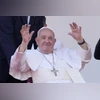
The pope appeared weak and frail when he greeted the crowd outside the Gemelli hospital before his discharge. | File Photo
Pope Francis' medical team briefly considered suspending treatment after a February 28 breathing crisis but instead decided on an aggressive course that put his organs at risk, the doctor coordinating the pope's hospital care said in an interview published Tuesday.
Dr. Sergio Alfieri said the 88-year-old pontiff and people close to him alike understood that he might not survive the night,' after the bronchospasm attack during which the pope inhaled vomit.
"We needed to choose whether to stop and let him go, or to push it and attempt with all of the possible drugs and the treatments, taking the very high risk of damaging other organs,' Alfieri told the Milan daily Corriere della Sera. In the end, that is the path we chose.
Francis was released Sunday after 38 days of treatment for double pneumonia, under doctors' orders to observe two months of convalescence during which he should avoid large gatherings.
The pope appeared weak and frail when he greeted the crowd outside the Gemelli hospital before his discharge.
The Vatican has said it is not clear if the pope will meet with King Charles III on a Vatican state visit next month, or any Holy Week activities leading up to Easter on April 20.
Alfieri said that the pope remained alert' throughout the February 28 ordeal and that his personal health care assistant, Massimiliano Strappetti, who knows perfectly the pontiff's wishes,' urged them to try everything. Don't give up.
Alfieri acknowledged that the treatment risked damaging the pope's kidneys and bone marrow, but we continued, and his body responded to the treatments and the lung infection improved.' The medical bulletin that night said that the pope had suffered a bronchiospasm so severe that he inhaled vomit worsening his respiratory picture. Doctors used a non-invasive aspiration to clear his airways.
Three days later, in a second life-and-death crisis, the pope suffered a pair of acute bronchiospasms episodes. Doctors used a camera tube with a device to remove mucus plus that yielded abundant secretions. The bulletin emphasised that the pope always remained alert, oriented and collaborative.' Alfieri said he believed that prayers for the pope help keep him alive, something that the doctor said is backed by scientific literature.
In this case the whole world was praying. I can say that twice the situation was lost, and then it happened like a miracle,' the doctor said, adding that of course he was a very cooperative patient.

 "Pope Francis' doctors considered stopping treatment after breathing crisis")


 Connect with us on WhatsApp