
Proposed European force for Ukraine may respond if Russia attacks: Macron
Macron spoke after talks with Ukraine President Volodymyr Zelenskyy and ahead of a summit in Paris of some 30 nations today
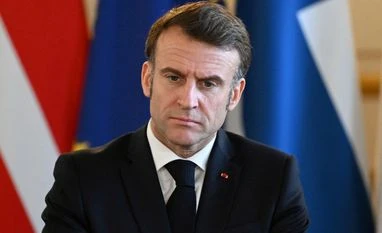 "Proposed European force for Ukraine may respond if Russia attacks: Macron")
Explore Business Standard
Macron spoke after talks with Ukraine President Volodymyr Zelenskyy and ahead of a summit in Paris of some 30 nations today
French President Emmanuel Macron said on Wednesday that a proposed European armed force for possible deployment in Ukraine in tandem with an eventual peace deal could respond to a Russian attack if Moscow launched one.
Macron spoke after talks with Ukraine President Volodymyr Zelenskyy and ahead of a summit in Paris of some 30 nations on Thursday that will discuss the proposed force for Ukraine.
If there was again a generalised aggression against Ukrainian soil, these armies would be under attack and then it's our usual framework of engagement. Our soldiers, when they are engaged and deployed, are there to react and respond to the decisions of the commander in chief and, if they are in a conflict situation, to respond to it, Macron said.
Their collective name, coalition of the willing, suggests that the loose grouping of Ukraine's allies certainly wants to help. But as the nearly three dozen nations gather again for more talks in Paris, it is still far from clear exactly what kind of aid they are preparing that could contribute toward their goal of making any ceasefire with Russia lasting.
Macron, who has been driving the coalition-building effort with UK Prime Minister Keir Starmer, is expecting 31 delegations around the table on Thursday morning at the presidential Elysee Palace. That's more than Macron gathered for a first meeting in Paris in February evidence that the coalition to help Ukraine, possibly with boots on the ground, is gathering steam, according to the presidential office.
The big elephant in the room will be the country that's missing the United States.
US President Donald Trump's administration has shown no public enthusiasm for the coalition's discussions about potentially sending troops into Ukraine after an eventual ceasefire to help make peace stick. Trump's special envoy, Steve Witkoff, has dismissed the idea of a European deployment or even the need for it.
It's a combination of a posture and a pose and a combination of also being simplistic, he said in an interview with former Fox News host Tucker Carlson.
That's not the view in Europe.
The shared premise upon which the coalition is being built is that Russian President Vladimir Putin's actions in Ukraine starting with the illegal seizure of the Crimean Peninsula in 2014 and culminating in the 2022 full-scale invasion that unleashed all-out war shows that he cannot be trusted.
They believe that any peace deal will need to be backed up by security guarantees for Ukraine, to deter Putin from launching another attempt to seize it.
European officials say that in any peace-deal scenario, Ukraine's first line of defence against any future Russian aggression would be Ukraine's own army.
Options for the coalition of allies could include providing more military training to help replenish the Ukrainian army's losses, which Kyiv keeps secret but are heavy after more than three years of intense fighting.
That's something allies already have been doing, preparing more than 75,000 Ukrainian troops for battle against Russia's larger and expanding military.
The 27-nation European Union is also pressing ahead with a so-called steel porcupine strategy aimed at making Ukraine an even tougher nut for Russia to crack, by strengthening its armed forces and defense industry.
Britain is also pledging continued military aid so Ukraine can keep fighting if peace talks fail or a ceasefire is broken.
(Only the headline and picture of this report may have been reworked by the Business Standard staff; the rest of the content is auto-generated from a syndicated feed.)
First Published: Mar 27 2025 | 6:45 AM IST

