
Ukraine's incursion into Russia embarrasses Putin; how will it affect war?
The Russian military has thus far struggled to deal with the surprise attack, which has led tens of thousands of civilians to flee the region
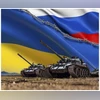 "Ukraine's incursion into Russia embarrasses Putin; how will it affect war?")
WebinarsNew
Deep DiveNew
Explore Business Standard
The Russian military has thus far struggled to deal with the surprise attack, which has led tens of thousands of civilians to flee the region
The swift Ukrainian incursion into Russia's Kursk region that began last week has been the largest cross-border raid by Kyiv's forces in the nearly 2 -year war, and has exposed Russia's vulnerabilities and dealt a painful blow to the Kremlin.
The Russian military has thus far struggled to deal with the surprise attack, which has led tens of thousands of civilians to flee the region.
For Ukraine, the raid has provided a much-needed boost to morale at a time when its undermanned and under-gunned forces are facing relentless Russian attacks along the more than 1,000 kilometre (620-mile) front line.
Here's a look at the Ukrainian raid and its implications:
How has the attack unfolded?
Kyiv's troops poured into the Kursk region from several directions last Tuesday, quickly overwhelming a few checkpoints and field fortifications manned by lightly armed border guards and infantry units along the region's 245-kilometre (152-mile) frontier with Ukraine.
Unlike previous raids conducted by small groups of anti-Kremlin Russian volunteers fighting alongside Ukrainian forces, the incursion into the Kursk region reportedly involved units from several battle-hardened Ukrainian army brigades.
Matthew Savill, military sciences director at the Royal United Services Institute in London, said Monday that Ukrainian forces had pushed up to 30 kilometres (19 miles) in some directions. He also said the total area covered by the incursion appears to be around 400 square kilometres (154 square miles), although it is unclear how much of that territory they actually control.
Savill said there's evidence that up to 10,000 Ukrainian troops from at least four brigades -- and possibly more -- being involved, and that they're using Western-provided equipment, including infantry fighting vehicles.
How is the Russian military responding?
Caught off guard, Russian troops failed to mount a quick response. With the bulk of their army engaged in the offensive in Ukraine's eastern Donetsk region, few troops were left to protect the Kursk border area.
The manpower shortage led Russia's military command to initially rely on warplanes and helicopter gunships to try to counter the attack. Advancing Ukrainian forces managed to down at least one Russian helicopter damaged another, according to Russian military bloggers.
Russian reinforcements, including elite special forces units and hardened Wagner mercenaries, have started to arrive in the Kursk region, but so far they appear to have failed to dislodge the Ukrainian troops from Sudzha and other areas.
What are Ukrainian authorities saying about the incursion?
Zelenskyy confirmed for the first time that Kyiv's forces are operating in the Kursk region and said the incursion was purely a security issue for Ukraine.
In a video posted Monday to his Telegram channel, Zelenskyy said the Ukrainian military was hitting back at Russian forces that had launched strikes at Ukraine from the Kursk region.
It is absolutely fair to attack Russian positions, including airfields and logistics used to strike Ukraine, Zelenskyy said, adding the goal of the mission was liberation of the border from the Russian military.
In the video, Ukraine's top military commander, Gen Oleksandr Syrskyi, also told the president that Kyiv's forces control 1,000 square kilometres (386 square miles) of the Kursk region. The claim could not be independently verified.
Zelenskyy adviser Mykhailo Podolyak suggested last week that such an operation would improve Kyiv's hand in any future negotiations with Moscow.
What is the Kremlin saying?
Russian President Vladimir Putin has described the incursion as a large-scale provocation that involved indiscriminate shelling of civilian buildings, residential houses and ambulances.
Putin suggested that the Ukrainian attack is an attempt by Kyiv to stop Moscow's offensive in Ukraine's Donbas region and gain leverage in possible future peace talks. Speaking to his top officials Monday, he vowed that Moscow would fulfil all of its military goals.
It's obvious that the enemy will keep trying to destabilise the situation in the border zone to try to destabilise the domestic political situation in our country, Putin said. Russia's main task is to squeeze out, drive the enemy out of our territories and, together with the border service, to ensure reliable cover of the state border".
The Kursk region's acting governor, Alexei Smirnov, said Monday that Ukrainian forces had taken control of 28 settlements. He said 12 civilians had been killed and 121 others, including 10 children, had been wounded since the start of the incursion. About 121,000 people have left or been evacuated from combat areas, he said.
Russia announced a federal emergency in the Kursk region and declared a counterterrorism operation there and in the neighbouring Belgorod and Bryansk regions, giving local authorities more powers to quickly coordinate an emergency response and tighten security.
What are Ukraine's goals and how could the situation unfold?
By launching the incursion, Kyiv could be aiming to force the Kremlin to divert resources from Ukraine's Donetsk region, where Russian forces have pressed offensives in several sectors and made slow but steady gains. If Ukraine manages to hold on to some of its Kursk gains, that would strengthen Kyiv's hand in future peace talks and could allow it to trade them for Russian-occupied Ukrainian territories.
The incursion has also dealt a blow to the Kremlin, highlighting its failure to protect the country and shattering Putin's narrative that Russia has remained largely unscathed by the hostilities.
The incursion also has sent a strong signal to Kyiv's allies that the Ukrainian military could seize the initiative in the war -- a message particularly important ahead of the US presidential election.
But despite the initial successes, the foray into Russia might cause attrition in some of Ukraine's most capable units and leave troops in Donetsk without vital reinforcements.
Sustaining a force of any size in Russia and defending against counterattacks will be hard, given the limited reserves available to Ukraine, said Savill, of RUSI.
(Only the headline and picture of this report may have been reworked by the Business Standard staff; the rest of the content is auto-generated from a syndicated feed.)
First Published: Aug 13 2024 | 7:14 AM IST


 Connect with us on WhatsApp