


How nearshoring powers globalisation
The Globalization Myth lays out a compelling vision explaining why links to the world and, above all, to neighbours first, are vital for a more competitive and inclusive future
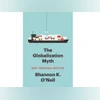 "Book")
premium
The Globalization Myth
5 min read Last Updated : Oct 31 2023 | 9:51 PM IST
The Globalization Myth: Why Regions Matters
Author: Shannon K. O'Neil
Publisher: Yale University Press
Pages: 241
Price: Rs 2,052
Globalisation is commonly understood to have accelerated in the 21st century, mostly induced by technological advances. Optimists say the process is irreversible while sceptics contend that there is a pushback because the perceived gains have not percolated across and within nations. Shannon K O’Neil presents an entirely new perspective in her book The Globalization Myth, asserting that regionalisation is at the heart of globalisation. Her research affirms that the tripling of global trade in the past four decades owes much to nearshoring and, in that sense, the world has regionalised more than globalised in the post-World War II era.
Ms O’Neil has focused on developments in the last two decades in three distinct regional hubs — Asia, Europe and North America — to substantiate her claim that regional bloc dynamics have helped attract trade, investments, technology, new skills and so on, resulting in higher growth rates. She contends that the EU’s policies of harmonising rules and regulations across sectors and dismantling border controls that allowed seamless movement of people and goods across the region benefitted it greatly. In Asia, Japan led the pack and soon Korea and Taiwan, its former beneficiaries, expanded and pulled Asean and China into the production processes as regional integration picked up steam. China’s climb from an apprentice to master came from a conscious strategy of seeding regional supply chains with investments and regional trade agreements.
The high degree of regional integration both in Asia and Europe, Ms O’Neil underlines, happened not accidentally but as a conscious policy decision and, in that sense, she maintains that globalisation is a choice, not an inevitable consequence. She describes how the spurt in intra-trade occurred due to the deliberate push for regional free trade agreements (FTAs) that helped link up supply chains to cheaper raw material and intermediates. Substantial foreign direct investments (FDIs) and cross-border acquisitions occurred within the regions. Several top brands, such as Ikea, CISCO, GE, Siemens, Alibaba, Walmart and Vodafone, concentrated their businesses in their immediate regions. Even money circulation is said to have stayed within the regions as can be inferred from the 2008 global financial crisis that affected mostly the US and European banks.
The author also presents the alternative evidence of how the absence of regional integration was the underlying factor that led to reduced intra-trade, retarded investment, low growth for Latin America, Africa, South Asia and West Asia and boxed these countries into middle-income traps. This unstable situation is attributed to parochial policies more than capital constraints that protected local companies and promoted homegrown industries.
This is largely a US-centric book in which Ms O’Neil’s primary concern is the deteriorating competitiveness of US businesses. She attributes its failures to missed opportunities with its neighbours and fewer trade agreements, denying it preferential access to enduring markets. She explains how Donald Trump’s policy of raising steel tariffs in 2018 was flawed as it amounted to self-imposed tariffs of up to 2 per cent on exports, resulting in billions of dollars of losses for US businesses. The consequential loss of jobs was blamed on immigration as a sticking point in the integration of North America.
As global trade is expected to evolve competitively in the future under ambitious regional FTAs such as The Regional Comprehensive Economic Partnership and the Comprehensive and Progressive Agreement for Trans-Pacific Partnership, US companies will be at a significant disadvantage. The talisman, the author suggests, is in championing free trade rather than shying away from it. The logic stretches to mean that blocking others’ advancement will never be as effective as outpacing them, just as trying to preserve the past through protectionism only weighs down the future.
Several of Ms O’Niel’s prescriptions border on naivety. For example, enlisting neighbours to the cause of “Buy North American” instead of “Buy American” is easier said than done in a competitive political democracy that feeds on a “Nation First” rhetoric. Her suggestion to bolster the continent’s workforce by creating common professional standards to facilitate easier movement of the workforce ignores market demands for high skills in the competitive age of artificial intelligence and robotics. The narrative also ignores the challenges of developing countries in integrating regionally, much less globally.
The assumption that embracing free market philosophy serves as a remedial pill for developing countries grossly overlooks the dark side of protectionism pursued by developed countries under the invisible walls of non-tariff barriers (NTBs). The causal link between FTAs and rise in exports is too simplistic to appreciate given that the practice by FTA partners of dumping goods ruins manufacturing and thus jobs in developing countries.
Notwithstanding these weaknesses in the book, Ms O’Neil deserves accolades for her original and bold strategy that lays out a compelling vision explaining why links to the world and, above all, to neighbours first, are vital for a more competitive and inclusive future. It holds immense relevance for India’s “Neighborhood First” policy where deeper economic integration in South Asia is imperative for creating prosperity for all in our region.
The reviewer is a serving Indian Foreign Service officer
Topics : BOOK REVIEW BS Reads Globalisation