


Men at home: Gyanendra Pandey on the male retreat from household work
Gyanendra Pandey's book shines a spotlight on men's private lives at home-and the rationalisations behind their absence from cleaning, caregiving, and cooking
 "book")
premium
5 min read Last Updated : May 27 2025 | 11:34 PM IST


Listen to This Article
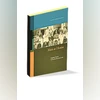
MEN AT HOME: Imagining Liberation in Colonial and Postcolonial India
by Gyanendra Pandey
Published by Orient
BlackSwan
xiii+222 pages ₹1,190
My grandfather often narrated a story about a friend who once deviated from his daily routine and returned home in the afternoon, rather than his usual late-night hour. His wife, startled by this disruption, shut the door in his face saying, “He is not home.” Amusing and apocryphal, this anecdote encapsulates the stark separation of male and female domains — so rigid that a man, encountered out of context, became a stranger in his own home.
The academic interest in this separation is not new. However, most inquiries have centred on women entering the public or paid workforce, leaving their domestic roles behind. In a refreshing inversion, Gyanendra Pandey’s latest book turns the spotlight on men — specifically, on their private lives within the home. He probes their interactions with spouses and children, and more significantly, their (largely absent) involvement in everyday domestic tasks — cleaning, caregiving, cooking. The book examines the rationalisations that underpinned this absence. Among affluent men, the belief in a higher societal mission often justified their detachment from home life; they saw their calling as transformative and public, absolving them from mundane familial obligations. In contrast, working-class men were consumed by the struggle for economic survival, which left little space for household engagement.
The material for the book comes from the memoirs and autobiographies of a wide cross-section of prominent early 20th-century men in pre-Partition India. In several cases, these male narratives are supplemented by writings from their wives, offering valuable complementary insights. The lives examined include both upper-caste and Dalit men, as well as Muslim intellectuals and activists, giving the book a broad and inclusive sweep.
What elevates the book further is Mr Pandey’s lucid writing, peppered with vivid glimpses into the home lives of public figures such as Harivansh Rai Bachchan, Premchand, Rahul Sankrityayan (upper caste); B R Ambedkar, Jagjivan Ram, Om Prakash Valmiki, Narendra Jadhav (Dalit); and Akbar Mirza, Akhtar Hussain Raipuri (Muslim), among others. For a book that traverses such a wide canvas, it is remarkably concise and accessible. The narratives not only personalise history but compel the reader to reflect on what has changed over the last century —and what remains surprisingly constant.
One aspect that particularly caught my attention was Mr Pandey’s discussion of domestic architecture. While clearly applicable to families with the means to own spacious homes, the point remains relevant, as most of Mr Pandey’s subjects belonged to this class. The physical layout of such homes often facilitated the easy enforcement of separate male and female spaces that reinforced societal norms. With urbanisation and the spread of apartment living, such spatial separations have largely disappeared. Yet, despite transformations in housing, as well as parallel improvements in women’s education and health outcomes, the domestic space —especially the kitchen —remains overwhelmingly female. Contemporary Time Use Surveys reveal that Indian women still spend approximately ten times more time on domestic and care work than men. This gender imbalance remains among the most severe in the world.
The broader literature on the intersection of caste and gender suggests a complex trade-off: Upper-caste women often experienced material privilege alongside stricter constraints on mobility, visibility, and decision-making within the home. My examination of national-level data indicates that this trade-off has significantly weakened over time and has now completely disappeared. Mr Pandey’s detailed accounts add further nuance. In many Dalit households, women worked for wages — sometimes as primary breadwinners. This economic role brought a degree of parity, visible in small but meaningful ways: Couples walking home from work together, stopping to buy vegetables, the husband assisting in cutting them. Yet, beyond this shared labour, the weight of domestic responsibilities still fell on the woman. Economic autonomy did not necessarily protect these women from patriarchal dominance. Their increased mobility often stemmed from compulsion rather than choice and did not translate into broader equality within the home.
As with any study centred on a selected group, questions about representativeness naturally arise. Why these particular men? A deeper discussion of the rationale guiding their selection would have strengthened the work. More significantly, the book would have benefited from situating these Indian experiences within a broader international frame. What did the domestic roles of men in early 20th-century Europe or America look like? Available evidence —ranging from advertisements to ethnographic accounts — suggests that Western men, too, were largely absent from household labour, seeing themselves primarily as breadwinners. Yet, despite similar starting points, norms around domestic labour have evolved far more in Western societies than in South Asia. Why have South Asian norms been so resistant to change? This enduring puzzle — of particular personal relevance — lingers after reading. It is a question that invites further exploration, and one hopes readers of this engaging and important volume will take it forward in their own work.
The reviewer is professor and head, department of economics, and founding director, Centre for Economic Data and Analysis at Ashoka University
Topics : BS Opinion Book BOOK REVIEW