


Shattered Lands: Sam Dalrymple uncovers the subcontinent's dark realities
Sam Dalrymple's book contextualises the shared history of the subcontinent and reminds us of its many dark realities
 "BOOK")
premium
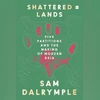
Shattered Lands: Five Partitions and the Making of Modern Asia
4 min read Last Updated : Jul 10 2025 | 10:38 PM IST
Listen to This Article
Shattered Lands: Five Partitions and the Making of Modern Asia
By Sam Dalrymple
Published by Harper Collins
536 pages ₹799
The standard school history syllabus teaches about the partition of India in 1947, which led to the creation of two nation states accompanied by searing communal violence. Even when we leave school, we retain this limited viewpoint as an absolute fact around which contemporary politics revolves in our country. In Shattered Lands: Five Partitions and the Making of Modern Asia, Sam Dalrymple wants to take us through the more complex “how, what, when and why” of the history of the subcontinent, contradicting the standard presumptions about that traumatic period of modern Indian history.
As Mr Dalrymple presents it, Partition was never a singular moment in time but a long process. The author has structured the book into chapters in a way that demonstrates this progression of events. It starts with the arrival of the Simon Commission, a time that also cemented the probability of Partition in the region. It was also the period that saw a tumultuous time in Burma leading to the biggest and most sustained revolt in the history of the post-1857 British Raj, which later led to separation of that country from the Indian counterpart.
With World War II, things got more complex. On one side, the Bengal famine led to millions of starvation deaths; on the other hand the Japanese were trying to commandeer the Nagas as allies, which they failed to do. The author has carefully included relevant maps for the reader to understand what was happening geographically at a particular time such as the Battle of Kohima in 1944, where Japanese troops along with Bose’s Indian National Army (INA) fought against the British Indian army.
Today when the far right politics is obsessively searching for “the other” in the country by targeting Bengali Muslims and subsequently dispossessing them of their citizenship, Mr Dalrymple’s book contextualises the shared history of the subcontinent and reminds us of its many dark realities. He mentions how the persecution of Communists and Dalits in East Pakistan forced Nehru to intervene, leading to the Nehru-Liaquat Pact, which essentially aimed at protecting the rights of refugees and minorities in both countries, something that both nations are struggling to uphold today. In Shattered Lands, Mr Dalrymple has been careful to humanise history. Jinnah’s outcry as manifested in his “Fourteen Points” in response to the Nehru Report focusing on the brotherhood of Hindus and Muslims is just one example. Another aspect of Partition and its traces were the after-effects it left on artistes at large as they lost royal patronage and were forced to either pursue alternative means of employment or find opportunities on the radio or in the movies.
Much has been written about the Raj but there have always been pockets of history about which I yearned to know more. Mr Dalrymple has been able to cover Burma quite efficiently, especially underlining the life of Aung San, the Burmese student activist who rose to becoming the leader of his country once it attained its freedom and his tragic early assassination. His mantle was later assumed by his famous daughter Aung San Suu Kyi, who was put under house arrest for 15 years, and then went on to become the head of state, but was dethroned in 2021 by a military coup. She was once called one of the children of Gandhi and even won the Nobel Peace Prize in 1991. However, her support of the military persecution of the Rohingyas has deeply tarnished her image and cost her much Western support. I had hoped the author would explore the Arab region in the west, which came under British rule after World War I, and where partitions have been no less painful. Perhaps he will do so in his next book.
Sam Dalrymple is the son of historian William Dalrymple who is widely read and celebrated in the Indian literary scene, so the temptation of comparing his debut with his father’s works will be high. It is fair to say he has undoubtedly made his own mark. Today, when history is being manipulated for political gains, Mr Dalrymple’s books will help to ground the reader in history sans propaganda.
The reviewer is a writer and translator from Allahabad, and a co-founder of RAQS, a collective on gender, sexuality and mental health