What was the biggest challenge in executing the project?
There were a clutch of challenges, including marine environment and engineering challenges such as sub-surface power lines and working in sync with the tides. Next, was the challenge of appeasing the fisherfolk and ensuring that their lives were not disrupted, for which, the orthotropic steel decks (OSDs) were constructed. They have longer spans and lesser piles, under which fishing trawlers can pass. Weather changes, cyclones and, not to mention, the pandemic were all serious challenges.
How much did Covid add to these challenges?
The global pandemic compounded the intricacies of this mammoth project. The workforce numbers dwindled at the height of the pandemic that hindered progress. There were disruptions in the supply chain, resulting in scarcity of raw materials and presenting challenges in the seamless resumption of project activities.
Were there any unexpected hurdles?
Navigating the complexities of managing a substantial marine fleet during cyclones and confronting geological surprises in the seabed would be two of them.
How difficult was it to mobilise resources in a busy city like Mumbai?
The logistics challenge was an ever-persistent one, being executed in a congested city like Mumbai such as moving thousands of workmen and providing for their accommodation and other needs. We successfully moved 5,000 labourers, 200,000 million tonnes (MT) of steel and 1.3 MT of bulk materials for concrete production. We used 1,500 assets all of which had to be available at the project site, both on land and in the sea at the right time.
What are the anecdotes you would like to share?
During the OSD span erection, as the colossal steel decks gracefully found their place over the ever-changing tidal waters, a sense of collective achievement permeated the team. It was a moment where expertise, innovation, and teamwork converged, reflecting not just a construction milestone but a testament to human ingenuity.


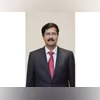 "S V Desai, Whole Time Director & Senior Executive Vice President (Civil Infrastructure), L&T")