There are a huge number of fabs (fabrication units) being built worldwide. What is SEMI’s projection of India’s share by 2030?
According to the SEMI World Fab Forecast report from September 2024, 108 wafer fabs are set to come online through 2027, with 87 in various stages of implementation.
SEMI forecasts that an additional 50-plus fabs will be needed between 2027 and 2030 to support the projected $1 trillion in annual semiconductor revenue by the decade’s end.
In my opinion, India’s aspirational goal should be to have over 10 fabs by 2030, but this depends on the successful execution of the already announced five-plus manufacturing units and a focus on building India’s ecosystem.
The government has set a target of achieving a 10 per cent share in the global outsourced semiconductor assembly and testing/ assembly testing marking and packing (OSAT/ATMP) space in five years, aiming to increase to 20 per cent by 2030. Is that achievable?
Yes, it is possible, and India is already off to a good start. Compared to wafer fabs, investments in OSAT/ATMP are smaller, and the complexity is also lower. These lower barriers to entry provide a strong opportunity for rapid growth. The buildout of the semiconductor ecosystem will help attract additional investments in wafer fabs.
Most of the demand for chips by mobile device makers in India is met by fabless companies like Qualcomm, which rely on Taiwanese manufacturers. Who will Indian wafer makers sell to, or can they export?
India’s initial challenge will be producing chips at a competitive cost, which depends on the scale and flawless execution. Successful chipmakers strive for zero defects and high yields, especially in high-volume markets like mobile devices, where every rupee counts.
India is known for its engineering talent, but the workforce lacks training in semiconductor manufacturing. How big is this challenge?
The talent gap is a serious issue worldwide, but India has the right ingredients and raw talent to succeed. SEMI will play a crucial role in training this workforce. If there were no available raw talent, India’s semiconductor industry would have struggled to get off the ground.
Why have the big guns like Taiwan Semiconductor Manufacturing Company, United Microelectronics Corporation, and Intel Corporation stayed away from India?
SEMI does not comment on individual member companies. However, at a recent Semiconductor Executive Summit ahead of Semicon India, over 100 CEOs and chief experience officers from across the value chain were impressed and convinced by what India has to offer as the next big semiconductor hub.
India plans to manufacture chips at 28 nanometre (nm) and above, but demand projections by the India Electronics & Semiconductor Association indicate that nearly 70 per cent of the demand in 2030 will be for chips below 28 nm. Will India still need to import most of its chips?
Demand is growing across all nodes, and there is a strong opportunity for India to start with mature nodes. For example, many chips and sensors for mobile devices are produced on mature nodes, and demand for these devices is not diminishing.
While there is currently a high demand for advanced nodes due to the rise of data centres and artificial intelligence-enabled services, it will take time for India to develop expertise in this area. However, once India establishes itself as a viable player at 28 nm and above, advancing to more sophisticated nodes will follow.
Despite having many chip designers, India lacks major home-grown chip design companies. Most designers work for multinationals. Should India have focused on building big design companies rather than fabs?
Fabless giants like Advanced Micro Devices, Nvidia, and Qualcomm have already announced plans to expand their presence in India, with more likely to follow. As the semiconductor ecosystem grows, more major players will consider investing in manufacturing and dipping into the talent pool. This will create opportunities for India’s developing talent to stay, and it may even attract talent to return home.


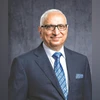 "Ajit Manocha, President & CEO, SEMI")

