


iPhone, PS5 fly off shelves: Blinkit's big ticket profitability play
The quick-commerce platform has been experimenting with category expansion ranging from standard fresh food and groceries to high-value retail categories
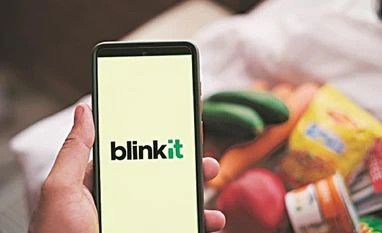 "blinkit")
premium
5 min read Last Updated : Apr 14 2024 | 11:44 PM IST
Gurugram-based gamer Aryan Singh could hardly believe it when his coveted Sony PlayStation 5 (PS5) arrived within just 15 minutes of ordering, along with his groceries. Singh had been making do with his old PS4, before quick-commerce platform Blinkit announced on April 5 that it would now be selling the latest gaming console.
“I had been looking to buy the PS5 for quite a while. I was ordering groceries on Blinkit when I saw the PS5 and ordered it instantly. It arrived at my doorstep within 15 minutes,” Singh said.
Within a day of its launch, several Blinkit dark stores in Delhi, NCR, Mumbai and Bengaluru – where the PS5 was made available – reported that the console had gone out of stock.
Gaming consoles are not the only big-ticket electronic products offered on Blinkit. Analysts say the company has long been experimenting with category expansion ranging from standard fresh food and groceries to other retail categories, ahead of its peers.
The platform, through its partnership with Apple premium reseller Unicorn, has been selling iPhones and other Apple products to customers in Delhi, NCR, Mumbai, Pune and Bangalore, for the past two years. According to Blinkit, its biggest order of 2023 came in the form of an iPhone 15 Pro Max, a packet of Lay’s chips and six bananas – worth Rs 1,59,900.
High-value assortments
Apple’s iPhone 15 series – which includes the iPhone 15, iPhone 15 Plus, iPhone 15 Pro, and iPhone 15 Pro Max – as well as the Apple Watch Series 9 and Watch Ultra 2 were available for purchase on Blinkit just 10 days after their official launch in the country.
It has also been selling gold and silver coins at the start of the festival season for the past two years.
More recently, the company has announced partnerships with the likes of Atomberg to deliver ceiling fans, and Lenskart to sell sunglasses within 10 minutes.
“With convenience-led ordering across products, there is a possibility this (quick commerce) segment would give tough competition to the likes of Amazon, Flipkart, Myntra, Nykaa and other larger e-commerce firms,” said brokerage firm Elara Capital in a note.
Industry sources suggest that quick commerce companies like Blinkit, with their near-instant delivery services, are already capturing a significant share of product sales of e-commerce giants like Flipkart and Amazon.
While a wider assortment of products is not only giving the Zomato-owned firm a leg up on the competition but also strengthening its position in the profitability race.
Growth and profitability
“Profitability and growth for quick commerce companies could be driven by a combination of a few factors such as push on more of higher average selling price (ASP) categories like electronics etc, how efficiently they can open and scale the dark stores, ad revenue potential uptake, and discounts rationalisation over time,” BofA analysts said in a note.
The company has admittedly been witnessing strong growth in both ad revenue and profitable expansion of its dark stores. Higher ASP categories, like iPhones and PS5s, have also allowed Blinkit to steadily improve its average order value (AOV) per transaction, which in turn, improves the margins of each order.
In the third quarter (Q3) of financial year 2023-24 (FY24), Blinkit’s AOV stood at Rs 635, as against Rs 607 in the previous quarter. Its gross order value (GOV) also increased 28 per cent sequentially driven by the increase in AOV, as per regulatory filings.
The total number of orders in the December quarter climbed to 55.8 million, from 45.5 million in the previous quarter, while monthly transacting users increased quarter-on-quarter to 5.4 million from 4.7 million.
With its first-mover advantage in several categories, analysts say that Blinkit is best placed to fend off the competition.
A clear market leader
As of the fourth quarter of calendar year 2023, Blinkit was the largest player with an estimated 46 per cent market share, basis an annualised GMV of $1.7 billion, followed by Swiggy Instamart at 27 per cent, Zepto with 21 per cent, and Bigbasket-owned BB Now at 7 per cent, as per a report by JM Financial.
“Today, Blinkit is a clear market leader in the space. It is not only growing exponentially, but also expanding the industry’s total addressable market (TAM) by demonstrating that quick-commerce is not only about delivering fresh food or groceries, but a gateway to instant e-commerce. What stands out is that Blinkit, despite these aggressive manoeuvres, is on track to turn profitable by 1QFY25,” said analysts at JM Financial.
Regardless, analysts at Elara Capital caution that the “share of quick-commerce firms within e-commerce may not scale up beyond a point, due to limitations of assortment across product categories.”
The grocery category currently contributes around 40-50 per cent of quick-commerce gross merchandise value, followed by 30 per cent from electronics and home office, and around 20-30 per cent from the beauty and personal care segment, according to BofA.
It might, therefore, be a while before Blinkit’s strategy to deliver higher AOVs provides a meaningful return.
>From PS5s to iPhones, gold coins to ceiling fans, Blinkit is selling several big-ticket products outside of grocery
>Near-instant deliveries provided by the likes of Blinkit are now taking a major portion of the product sales away from e-commerce giants Flipkart and Amazon
>Wider assortment of big-ticket products is helping Blinkit improve profitability by increasing its AOV
>Blinkit’s AOV stood at Rs 635 in Q3 FY24, versus Rs 607 in the previous quarter
>Regardless, the grocery category currently contributes around 40-50 per cent of quick commerce gross merchandise value (GMV)
>As of Q4 CY2023, Blinkit was the largest quick com player with a 46 per cent market share, followed by Instamart at 27 per cent, Zepto with 21 per cent, and BB Now at 7 per cent