


Preserve fossil fuel reserves to prevent climate change: Dr Mosongo Moukwa
According a report in Nature magazine, 82% of today's global fossil fuel reserves must be left underground to stop dangerous global warming. This report has huge implications globally
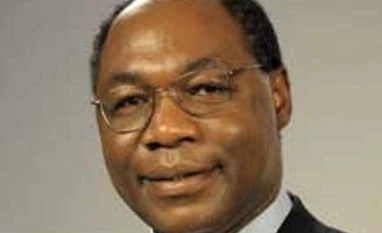)
Dr Mosongo Moukwa
A report was published last week in Nature on the need to limit fossil fuels production to stop dangerous global warming. According to the authors, Christophe McGlade and Paul Ekins, both of University College London's Institute for Sustainable Resources, 82 percent of today’s reserves must be left underground, if we are to avoid the catastrophic 5°C of warming. This is a choc treatment to a world addicted to fossil fuels.
But, it should not be a surprise. Indeed, the Intergovernmental Panel on Climate Change (IPCC) gave us their starkest warning, following nearly seven years of new research on the climate. It said it was ‘unequivocal’ and that even if the world begins to moderate greenhouse gas emissions, warming is likely to cross the critical threshold of 2°C by the end of this century.
The level of CO2 emissions should remain between 860 to 1180 Gt (Giga tonnes) from 2011 and 2050. If not, that would have serious consequences, including sea level rises, heat waves and changes to rainfall, meaning dry regions get less and already wet areas receive more.

Unburnable fossil fuels
The study estimates that a 35 percent of the world’s oil reserves, 52 percent of its gas reserves and 88 percent of its coal reserves must be left underground to avert a dangerous level of global warming. The carbon dioxide emissions contained in global fossil fuel reserves is estimated to be several times greater than 1,100 gigatonnes, the cumulative carbon emission limit from 2011 through 2050 that estimates predict must be adhered to, if we want a better than 50 percent chance at limiting global warming due to greenhouse gas emission below 2°C. If methods of carbon capture and sequestration (CCS) (still very embryonic) are implemented to limit the amount of CO2 released in the atmosphere, this will only slightly help (33 percent, 49 percent and 82 percent, respectively).
ALSO READ: The changing nature of oil prices: Dr Mosongo Moukwa
The researchers developed an innovative method for estimating the quantities, locations and nature of the world's oil, gas and coal reserves and resources to determine what it would take to stay below the 2°C limit. They then used an integrated assessment model to explore which of these, along with low-carbon energy sources, should be used up to 2050 to meet the world's energy needs. The model, which uses an internationally-recognised modeling framework, is an improvement over previous models, allowing it to provide a world-leading representation of the long-term production dynamics and resource potential of fossil fuels.
Regional expectations
Their solution varies from a region to another. The Middle East would need to leave 38 percent of its oil and 61 percent of its gas. For Africa, this would be 26 percent and 34 percent respectively. China and India combined would need to leave alone 25 percent and 53 percent, respectively; Europe at 21 percent and 6 percent, and the former USSR countries at 19 percent and 59 percent. Canada would have to leave 75 percent of its oil and 24 percent of its gas. However, the US, would leave 9 percent of its oil and 6 percent of its gas. The reason why the figures for the US appear so low is because of the proximity between the production and consumption centres, which reduces costs, according to the authors. Overall restrictions across countries are more severe for coal. Even the Middle East would need to leave alone 99 percent of its coal.
While the prospects for gas are better, the study found that 50 percent of global reserves must remain unburned. But, there are stark regional variations, with the giant gas producers in the Middle East and Russia having to leave huge quantities underground, while the US and Europe can exploit 90 percent or more of their reserves to replace coal and provide local power to their large cities.
Implications
This report has huge implications. It would mean that over the next 30 years the nations of the world, especially the US, China and European countries, have to decarbonise their economies almost entirely. By 2050 they would have to produce electricity, run vehicles, heat and cool buildings, and grow food, not mainly with oil, gas, or coal but rather with solar, wind, and other methods that emit few greenhouse gases.
ALSO READ: Vipul Shah: Can India bridge the gap in global manpower shortage?
Leaving two-thirds of the earth’s fossil fuel reserves in the ground would revolutionise global energy practices. It would also invalidate the business plans of some of the richest and most powerful enterprises in history, fossil fuels companies, which own massive oil and gas reserves. This also calls into question large sums of investments being ploughed into exploration for new fossil fuel reserves that will not be burned. This includes fracking, which strives to access deposits that conventional drilling cannot reach, some of the very deposits the two-thirds imperative puts off-limits. They should consider shifting their investments towards developing low carbon energy sources.
If the world goes along with the 2°C ceiling, powerful companies will see their prospective profits vanished. Today’s fossil fuel reserves represent trillions of dollars of wealth, both on the balance sheets of companies such as ExxonMobil and in the asset valuations that inform investors the world over. Being unable to sell most of those reserves would translate into a massive markdown on this wealth ($28 trillion according to one estimate). No shareholder would support such a move. So much so that ExxonMobil declared in April that it plans to find and market as much petroleum as it can, regardless of the 2°C limit. The two-thirds imperative would trigger titanic political battles as well.
If the climate talks in Paris in December are to have any meaning or purpose, governments should abandon the self-defeating policy of addressing only consumption, and concentrate on restricting production. Living in a world with 5°C of global warming, a world of climate breakdown, is a real possibility.
__________________________________________________________________________________________________________
Dr Mosongo Moukwa is Director of Technology at PolyOne, USA, and was recently an Independent Consultant based in Chapel Hill, USA, and Vice President - Technology at Asian Paints Ltd, Mumbai, India. He is a member of the American Chemical Society and Product Development Management Association.
Email: mosongo@mosongomoukwa.com
Don't miss the most important news and views of the day. Get them on our Telegram channel
First Published: Jan 12 2015 | 3:52 PM IST