


Bustling Petrapole border belies faltering India-Bangladesh trade
Cross-border trade is quietly dwindling amid strained ties between the two neighbours
 "Petrapole border, India-Bangladesh trade, Bangladesh, India trade policy, Indo-Bangla ties")
premium
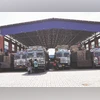
Trucks being unloaded at Petrapole cargo terminal. | Photo: Ishita Ayan Dutt
5 min read Last Updated : May 24 2025 | 12:50 PM IST


Listen to This Article
At first glance, the Petrapole land port — a vital gateway for trade between India and Bangladesh, about 80 km from Kolkata — appears to be a hive of activity. Trucks are lined up at the newly constructed eight-lane cargo gate, Maitri Dwar, awaiting clearance to cross the border. Vehicles arriving from Bangladesh are being unloaded, while those that have delivered imports wait to turn around.
But behind the bustle lies a more sobering reality: Cross-border trade is quietly dwindling amid strained ties between the two neighbours.
According to sources at the Petrapole land port, around 9,400 export cargo vehicles moved from Petrapole to Benapole in Bangladesh in March. Inbound traffic, meanwhile, saw around 4,100 trucks crossing into India. By April, those numbers had slipped to about 8,500 export trucks and just 3,200 import trucks.
The downtrend in cargo movement closely mirrors the state of geopolitical relations and recent trade developments following a regime change in Dhaka. The business community, however, had long read the signs and started bracing for impact.
Taking guard
When the Sheikh Hasina government fell in August 2024 and Muhammad Yunus assumed charge as chief advisor to the interim government of Bangladesh, there was a brief surge in trade — businesses moved fast, anticipating regulatory crackdowns. The result: Petrapole in 2024-25 reported the highest cargo movement in five years.
In 2024-25, total truck traffic through the port touched 153,000. Of these, 104,000 were export vehicles from India, and 49,000 were imports, according to the sources. The newly built infrastructure was more than ready to handle such high traffic.
Around six months ago, Union Home Minister Amit Shah inaugurated the Maitri Dwar along with a new passenger terminal at Petrapole — the most significant land border crossing for India-Bangladesh trade and passenger movement.
Nearly 70 per cent of all land-based trade (by value) between the two countries flows through this port. The massive cargo gate, with its sweeping arches at the zero line, was meant to herald a boom in bilateral trade.
Built to handle around 2,000 trucks daily, Maitri Dwar is equipped with the latest technology: Automatic number-plate recognition, boom barriers, facial recognition, and access control systems for both entry and exit.
But with trade restrictions tightening on both sides, the question remains: When will this gateway realise its true potential?
The roadblocks
On May 17, New Delhi imposed curbs on certain imports from Bangladesh. A report by the Global Trade Research Initiative (GTRI) estimated that the restricted items, at $770 million, accounted for around 42 per cent of all imports from Bangladesh. The most significant among them is readymade garments (RMG), arguably the backbone of Bangladesh’s economy and exports.
RMG can now enter India only via the Nhava Sheva and Kolkata seaports, not land ports. This is likely to increase both delivery times and costs, sources say. At Petrapole, RMG is one of the top-five import categories.
The Indian move followed Bangladesh’s own curbs in April on Indian yarn, rice, and other items, along with a new transit fee on Indian cargo. Yarn, notably, is among the top-five exported items from Petrapole.
Port officials hope that at least some of the other goods might still be routed through the land border. For now, the cargo terminal gives the impression of activity. The newly minted passenger terminal next door, by contrast, tells another story.
Waiting for takeoff
With a built-up area of 59,800 square metres, and constructed at a cost of nearly ₹500 crore, the new terminal resembles a modern airport.
A designated waiting area, a food & beverage outlet, and sufficient immigration counters — all are in place. The facility is designed to accommodate 25,000 travellers daily. But with visa restrictions still in force, passengers remain few and far between.
Benika Banik, who finally secured a medical visa for her son after a six-month wait, says she is at least covered for the next three months.
Ismail Hussain already has a medical visa. His 30-year-old brother, battling cancer, has been undergoing treatment for over a year. His visa is valid until July. “I hope the visa will be extended so that we can continue treatment,” he says.
Since the fall of the Sheikh Hasina government and political turmoil, visas are being granted only for medical and select categories. Unsurprisingly, daily passenger traffic, once around 8,000-9,000, is now roughly a quarter of that, says an official with the Land Ports Authority of India.
In 2023-24, passenger movement totalled 2.34 million. Today, the gleaming infrastructure is ready — built for scale. But the missing piece is no longer just passengers, but political will.
Topics : Bangladesh India trade policy Indo-Bangla ties