


Home / Industry / Agriculture / Farm export-import policy must balance grower, consumer interests: Chouhan
Farm export-import policy must balance grower, consumer interests: Chouhan
This year, rabi production has been good & overall food grain production in 2024-25 is almost 21.6 million tonnes more than what it was last year. We have touched a record high in wheat, Chouhan said
 "Shivraj Singh Chouhan")
premium
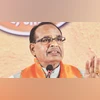
Shivraj Singh Chouhan (Photo: PTI)
6 min read Last Updated : Jun 01 2025 | 11:29 PM IST
Listen to This Article
As Shivraj Singh Chouhan is set to complete one year as Union agriculture and rural development minister, he speaks to Sanjeeb Mukherjee in New Delhi about his vision for the sector. The former chief minister of Madhya Pradesh also shares details about the ongoing mass contact programme with farmers and other priorities of his ministry. Edited excerpts:
Agriculture clocked good performance in the fourth quarter of FY25, registering a growth rate of almost 5.4 per cent and a full-year growth rate of 4.6 per cent — among the best in the last few years. How do you react to the numbers?
The fourth-quarter gross value added (GVA) numbers for agriculture and allied sectors are welcome news and I congratulate every farmer of this country on this.
This year, rabi production has been good and overall food grain production in 2024-25 is almost 21.6 million tonnes more than what it was last year. We have touched a record high in wheat.
The production of paddy, maize, groundnut, and soybean reached record highs in 2024-25. Our food grain stocks
are brimming.
I thank the Prime Minister for changing policies, programmes, and schemes to suit the interests of farmers. There has been a renewed focus on agriculture and the results of that are showing now.
One consequence of good growth in the farm sector is revival in rural demand, which has spurred overall consumption. Do you see this as another positive sign?
My experience shows that whenever there is some money in the hands of a farmer, farm production rises and
profit improves.
In Madhya Pradesh, as chief minister I transformed the economy of the state just through agriculture. This is because whenever a farmer gets some money the person spends on consumption items such as TVs, refrigerators, cars, and two-wheelers or on building homes. Thus demand grows and factories produce more, and capital is created. This then translates into more investment for both industry and trade.
Agricultural growth has a widespread impact and it has the potential to give a lease of life to the economy. My belief is that rural demand has grown only due to good agricultural production.
Next agricultural year, July-June 2025-26, the impact of the southwest monsoon is projected to be good and in some parts of the country, the rains have arrived. Do you think this momentum will be maintained in the coming year as well?
With the efforts we are putting in and the steps we are taking, the year 2025-26 will exceed all expectations. For example we have started this Viksit Krishi Sankalp Abhiyan, one of the largest such exercises to bring farmers and scientists together.
We want to raise kharif production even more than we did this year. That’s why more than 2,000 teams of scientists, officials, and even farmers have fanned out across the country to reach out to farmers. Lab and land are getting connected.
In the past few days our teams from the Indian Council of Agricultural Research (ICAR) and the agriculture ministry have visited more than 8,138 villages and connected with almost 700,000 farmers. The ministry, Krishi Vigyan Kendras (KVKs), the ICAR, agriculture universities, and states are combining their resources to focus on producing more: Which seeds to use, which varieties to grow, when and how much input to use, and how to grow more remunerative cash crops. If we can raise production by even 1 quintal (100 kg) from 1 acre, our production will rise by almost 20 million tonnes.
Once the campaign ends, we will devise state-specific agriculture research and development plans, and approach the finance ministry for more funds for crops based on inputs received from farmers.
One criticism of this mass contact campaign (Viksit Krishi Abhiyan) is that it focuses too much on raising production while the real challenge for India’s agriculture is falling farm incomes and farmers not getting the market for their produce. How would you address this?
We are working at all levels. On the one hand we are talking of the need to serve more than 1.45 billion people. Then, we are growing not just for ourselves. We are supplying abroad items such as paddy. We are focusing on raising the production of the food items we need, namely oilseeds and pulses. We need to grow more cash crops.
Coming to your question, when production rises and productivity improves; incomes grow because per hectare cost of production remains almost the same on fertiliser and seeds.
Recently, the government lowered import duties on edible oils, which has raised eyebrows in some quarters because while the government is increasing minimum support prices of oilseeds and pulses to encourage farmers to grow more of these crops, it is also allowing cheap imports. Don’t you think there is a contradiction here?
We are striking a balance when it comes to the import and export policies of agriculture produce. While the policy should ensure the right price for farmers we must also recognise that we have a large population to serve. And, it is our job to ensure that consumers get adequate supplies of essential items at the right price.
Often decisions are taken keeping the interests of consumers in mind. When I took office in June last year, I immediately recommended raising import duties on edible oils by 20 per cent. Therefore, we make decisions based on the need of that time.
What do you think should be an ideal export-import policy in agriculture?
It should ensure our food security and at the same ensure that our farmers’ interests should not be hurt. We need a balanced approach.
How has been the journey as agriculture minister?
I spend every moment in the service of farmers and rural people. Improving the conditions of farmers and women of this country is my sole mission now. People ask me whether I’m in the race for party presidency. If given the option, I would want to serve the farmers of this country more than anything else. Serving them is like serving god to me.