The minister was speaking at a roadshow organised by the Indian Mobile Congress (IMC) ahead of its flagship event in New Delhi in October.
While 5G technology is still in the early stages of deployment in India, 6G — the next-generation technology — is expected to transform the telecommunication landscape in the country with higher speeds, near-zero latency, and massive connectivity. Industry experts believe that commercial 6G services will be available by 2030, though research and development is already underway.
“Previously we had a digital divide, but now we have a digital dominance,” Pemmasani said, adding that under the current government, India has 1.2 billion mobile subscribers, 1 billion broadband connections, and BharatNet, which connects 2.2 lakh villages.
The government released the Bharat 6G Vision Document in 2023, with the objective of designing, developing, and deploying 6G network technologies that provide secure and intelligent connectivity. As part of the initiative, it sanctioned 100 5G labs at academic institutions in the financial year 2023–24 for capacity building and to create a 6G-ready academic and start-up ecosystem. The number of labs currently stands at 500, Pemmasani said.
India is already among the top six countries in terms of patent filings for 6G technologies. The Bharat 6G Vision aims to make India a leader in this technology through the Bharat 6G Alliance, more than 111 funded research projects worth over Rs 300 crore, partnerships with Japan, Finland, and Singapore, and breakthroughs in terahertz communications.
The country has also launched a collaborative initiative to develop a production-grade open-source platform for 5G, 5G Advanced, and 6G technologies, to be self-reliant in these next-gen technologies. The Foundation for Science Innovation and Development (FSID) at IISc Bengaluru, the Foundation for Innovation and Technology Transfer (FITT) at IIT Delhi, and the Centre for Development of Advanced Computing (C-DAC) have signed an agreement to this effect.


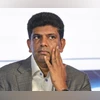 "Chandra Sekhar Pemmasani, Chandra Sekhar, Pemmasani")