


Chindia: Are war and trade related?
Just let loose the instincts of natural traders. Trade may not guarantee border peace but it will increase the cost of war
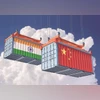 "India, China, India China Trade, Trade")
premium
Representative image
5 min read Last Updated : Sep 19 2026 | 12:24 AM IST
Listen to This Article
The short answer to the headline question is that they are inversely related, though not perfectly.
Two recent developments interested me. First, the Xi Jinping-Narendra Modi parleys at the Brics event in New Delhi; second, my attendance at the Asia Economic Dialogue in Singapore, sponsored by the Indian Council for Research on International Economic Relations, New Delhi, and East Asia Institute, Singapore. Both events seem great steps forward with potentially positive outcomes.
I became interested in the question whether trade deters wars and vice versa as I researched for my co-authored book Chanakya and Sun Tzu. I sense a prevalent view against India-China trade because we are perceived as competitors, and, anyway, there are border tiffs.
However, relations among nations are driven by leadership egos, apart from rational factors like defence and geopolitics. Nature and geology have made India and China proximate neighbours, though separated by mountains in the north. Both nations reached their economic apogee at the time of Aurangzeb around 1700 CE, when, together, they accounted for about half the world gross domestic product (Angus Maddison data). Over 2,500 years of recorded history, both societies were connected through thought, trade, and travel. Indeed, the interactions of the south appear richer — right from the days of the Pallavas, Cholas, and Pandyas to the Ming period (in China, ending in 1644).
Nowadays, India and China are working together to jointly register Xuanzang’s seventh-century travelogue The Great Tang Records, in the Unesco Memory of the World Register. India and China did not fight any major war for 2,500 years until both nations became republics in the middle of the previous century. By 1950, the joint share of the two nations in world gross domestic product had collapsed to single digits from the highs in Aurangzeb’s time. Since 1962, there have been disputes and skirmishes, and they dominate contemporary public mindsets. If the war in 1962 had not happened, would contemporary relations between India and China have developed differently? At least one high-ranking diplomat says “yes”.
Are wars and trade related? A healthy trade relationship retards the probability of war. For example: By isolating Iran through sanctions for a long period, thus retarding Iran’s trade flows, war with Iran became more affordable for the United States and Israel. There may be just a connection between the high volume of trade and low probability of war. After Ukraine-Russia disturbances since 2014, Ukraine’s trade with Russia dropped dramatically, thus increasing the cost of war for Ukraine.
In contrast, China became closely integrated into world trade after its admission to the World Trade Organization in 2001, reducing the probability of war with the US. For China, war to secure Taiwan or to resolve border disputes with its neighbours is expensive. Hence it reduces the probability of China going to war over Taiwan. This may well be President Xi Jinping’s patient long game. Likewise, in the current tensions, China exercises far greater care about its relations with the Gulf Cooperation Council (GCC) compared to its relations with Iran. Why? Chinese trade with the GCC is $300 billion compared to about $20 billion with Iran!
Studies by economists suggest (not prove!) that trade does have a soothing effect, lowering the chances that force would be applied to resolve differences between nations (“Does trade cause peace”, Soumaya Keynes, Financial Times, April 30, 2026). Of course, war is not impossible, but its probability is lower if trade is high. This was the thesis of Norman Angell in The Great Illusion, published in 1913. Unfortunately, soon after his book was published, the First World War began, bringing European nations with a high inter-trade into conflict! Subsequent studies suggest that the unfortunate timing of Angell’s book should not diminish the general validity of the hypothesis.
Trade between countries is like water flow. If water finds an impediment, it just goes around. Despite reported global tensions with China, the Italian fedora hat (remember Humphrey Bogart in Casablanca?) is pushing into China with its Borsalino brand! China’s Luckin coffee competes with Starbucks in Manhattan. During the India-Pakistan war of 1965, India’s export of steel, iron and coal to Pakistan continued. After World War I, Britain exported machine guns to its enemies. During the Crimean War of 1854, Russia and Britain faced each other on the battlefield but Russia continued to sell Britain various raw materials.
I return to the hypothesis implicit in our book Chanakya and Sun Tzu: A Business Lens on Trade, Thought, and Travel. India’s trade with China is significant, though lopsided in favour of China. Should India not pursue a trade pact with China, as it has done with faraway nations like the United Kingdom, New Zealand, and countries of the European Union, with appropriate safeguards for our national security? India did not join the Regional Comprehensive Economic Partnership. According to Kanti Bajpai, Emeritus Professor of Lee Kuan Yew School, India and China need to break the current “Nash equilibrium”, which is the balance when close engagement is the only solution. So, what can be done?
Just let loose the instincts of natural traders — Chinese Shanxi, Cantonese, and Fujianese, and our Chettiars, Marwaris, and Gujaratis — to increase trade after fulfilling appropriate national security safeguards. It is an idea worth exploring. It will not guarantee border peace but may lower the threat and increase the cost of war. Above all, it will bring prosperity to Bharat.
That is how Chanakya and Sun Tzu might have thought if they were present today.
The writer’s new book, Chanakya And Sun Tzu: A Business Lens on Trade, Thought, and Travel, has been coauthored with Nirmala Isaac. gopal.mindworks@gmail.com
Disclaimer: These are personal views of the writer. They do not necessarily reflect the opinion of www.business-standard.com or the Business Standard newspaper