


Donald Trump's Venezuela gamble: Test of Washington's coercive power
After Maduro's extraction, Washington's next steps will reveal whether this was a one-off or a shift towards coercive power
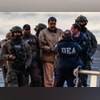 "Deposed Venezuelan President Nicolas Maduro")
premium
Deposed Venezuelan President Nicolas Maduro. (Photo: Reuters)
5 min read Last Updated : Jan 05 2026 | 11:38 PM IST
Listen to This Article
When Donald Trump’s National Security Strategy (NSS) outlined its goals in the Western Hemisphere as “Enlist and Expand,” little did the world imagine the seriousness and rapidity with which it would unfold. As declared in the strategy, Mr Trump dramatically moved to readjust the American military focus in its immediate backyard through Operation Absolute Resolve to extract Venezuelan President Nicolás Maduro and his wife.
Although Mr Trump appeared locked in on Venezuela, with Mr Maduro as his target for weeks, mobilising one of the largest American naval armadas close to Caracas and authorising the Central Intelligence Agency (CIA) to carry out lethal operations inside the country, the latest American action has unleashed a slew of concerns both inside and outside the US. Questions surrounding the legality of the operation have led countries to position themselves on one side or the other. Within the US, Congress may soon face key constitutional and oversight questions, as lawmakers appear divided. Fears of a new Trumpian twist to the Monroe Doctrine loom large over America’s evolving grand strategy, potentially recasting US influence across new countries and geographies.
Yet, the most imposing question concerns the proverbial “day after” for Venezuela, and for US foreign policy that now appears to be racing to implement Mr Trump’s strategic announcements — long dismissed by many as political whims rather than executable policy.
Mr Trump’s actions on Venezuela are centred on three primary pivots. The first is counter-narcotics operations and their underlying rationale. The second involves Venezuela’s vast oil, lithium, and other resources, ranking among the world’s largest. The third reflects a renewed strategic orientation towards the Western Hemisphere, demonstrating Washington’s willingness to employ military power to secure its interests in its own backyard.
Counter-narcotics operations have been steadily building around Venezuelan waters, spanning the Atlantic and extending towards the Pacific Ocean. The Trump administration’s counter-narcotics rationale is designed to place its military actions in the realm of law enforcement, rather than outright military invasion. How this framing holds up under international law remains to be seen, particularly as reactions unfold both within the US and globally. The Justice Department’s tacit approval, combined with historical legal precedent from 1989, when the US carried out a similar operation to extract Manuel Noriega in Panama, albeit under markedly different circumstances, has been cited as justification.
The Trump administration has since declared that the US is now “in charge” of Venezuela. The extraction of Mr Maduro appears to be a calculated step designed to stop short of full-scale regime change. By capturing the political leader while leaving Vice-President Delcy Rodríguez as the de facto authority, Washington seems intent on avoiding the immediate destabilisation that could follow a more radical political overhaul. Not installing María Corina Machado as Mr Maduro’s successor may reflect an assessment of potential fallout, which ranges from political dissent within Venezuela and international backlash to the risk of civil war and fragmented command structures inside the country.
The limited nature of the military operation has provided an off-ramp for regional states and the wider international community to position themselves carefully, balancing criticism of the US under Mr Trump with support for international law, sovereignty, and the principles enshrined in the United Nations Charter. Regional countries such as Cuba, Colombia, Brazil, and Mexico have voiced criticism of US actions, while Europe has positioned itself more delicately, avoiding strong condemnation.
Global reactions also matter in assessing what comes next, not just for Venezuela but for the broader region and beyond under the expanding contours of Mr Trump’s foreign policy. The calculated use of military force, now for the second time following Mr Trump’s decision to bomb nuclear facilities in Iran, has led to growing assessments that the threshold for the use of force may have been lowered under his leadership, reflecting a naked pursuit of national interests.
Mr Trump has also issued strong warnings and signalled potential actions against Colombia and Iran. This growing penchant for the use of force makes such estimations deeply worrisome for the global community. In Iran, as protests against the Islamic regime continue, the possibility of renewed military action in West Asia cannot be discounted, even as Mr Trump simultaneously gestures towards resuming trade connectivity and revitalising a second phase of the Abraham Accords. With Iran’s regional proxies weakened and the Gaza situation unresolved, the region may present what some in Washington could see as a perfect storm for further American intervention.
While the Trump administration may have achieved its immediate objective by extracting Venezuela’s leader, who is expected to be arraigned in the US, the larger challenge lies ahead. How Washington engages with Venezuela’s remaining political structures, manages regional reactions, and reconciles force with legitimacy will ultimately determine whether this episode marks a one-off assertion of power or the beginning of a more coercive phase in US global strategy.
This leaves the global community, particularly India and the Global South, teetering on the edge of strategic uncertainty. Concerns over regional stability, escalation, supply chains, and connectivity disruptions are growing. India, for its part, has positioned itself cautiously on the Venezuela question, expressing concern and calling for a diplomatic solution to the crisis while avoiding overt alignment with either camp.
The authors are, respectively, vice president and fellow (Americas) at ORF
Disclaimer: These are personal views of the writer. They do not necessarily reflect the opinion of www.business-standard.com or the Business Standard newspaper
Topics : Donald Trump BS Opinion Venezuela washington