Acoustics has been central to maritime operations because electromagnetic waves attenuate rapidly in water, while sound, especially very low frequencies, can travel thousands of kms underwater, through natural sound channels formed by temperature and salinity layers. Consequently, submarine navigation, communication, and detection have relied on acoustics since World War-I, evolving from simple hydrophones to advanced digital sonars. However, in recent years, acoustics has expanded to non-marine domains such as contested electromagnetic environments, tunnels, bunkers, jungles, and mountainous terrain.
Range and persistence in acoustics come at the cost of size. Very low frequencies (below 20 Hz), which travel great distances and bend through ocean layers, require massive systems that are hundreds-of-metres-long towed arrays and larger masts for shore-based transmitters. Advances in materials, especially high-performance single-crystal piezoelectrics, power electronics, and smarter designs are shrinking these platforms. However, the defining shift in acoustics has come from three technologies: Digital signal processing, adaptive beamforming, and artificial intelligence-driven detection and classification. These enable networks of small, highly sensitive sensors to be digitally synchronised and operate as a virtual large aperture. Data is fused across sensors on ships, submarines, unmanned platforms, and seabed nodes, much like Google Maps aggregates millions of noisy inputs to generate accurate, real-time traffic intelligence. Recent breakthroughs, including distributed fibre-optic acoustic sensing and emerging quantum sensors promise order-of-magnitude gains in sensitivity, making acoustics a strategically consequential frontier technology.
Nations are rapidly harnessing advanced acoustics to secure decisive military and strategic advantage. The US has moved beyond Cold War-era systems such as Sosus to highly classified “acoustic superiority” programmes, developing new sensors and quieting technologies, while also fielding acoustic gunshot and drone-detection systems for its army. Russia is investing in ultra-quiet submarines, advanced sonars, Arctic surveillance networks, and acoustic counter-battery and artillery detection systems such as BUH1a Sova. Russia also has an infrasound weapon Shepot. China is scaling fastest, building its Integrated Underwater Surveillance System, the “Great Underwater Wall of China”, in the South China Sea and exploring ways to turn key maritime zones into submarine kill-zones. Beyond these, France, Australia, Japan, and others are also investing heavily in advanced acoustic technologies.
The Indian Ocean Region (IoR) acoustic environment makes sonar technologies designed by the West for the colder Atlantic and Pacific unfit. Warm surface waters, shifting salinity gradients, strong thermoclines, and monsoon-driven variability in the IoR degrade Western-designed systems. Advanced acoustics suitable for IoR’s distinctive conditions have not been developed. Mastery of this environment confers decisive advantages in detection, concealment, and undersea control in the IoR. India, with its geography, sustained presence, and growing technological capacity, is uniquely positioned to lead in this domain.
For India, advanced acoustic capabilities are central to detecting hostile submarines near vital sea lanes and choke points such as the Andaman-Nicobar region, while also safeguarding seabed assets, including communication cables, sensor networks, and deep-sea infrastructure. Persistent acoustic surveillance will underpin future maritime domain awareness. Beyond the maritime domain, acoustics can support surveillance, drone detection, tunnel and bunker monitoring, and anti-Naxal operations in thick forests. Equally critical is the economic dimension: India’s International Seabed Authority-allocated deep-sea blocks for polymetallic nodule exploration and extraction will depend on advanced acoustic mapping, monitoring, and environmental assessment technologies. Developing robust, indigenous acoustic capabilities is, therefore, no longer optional for India. It is a strategic necessity.
India’s indigenous sonar of the 1970s and subsequent research has laid the foundation for more advanced capabilities. In recent years, the iDEX–Indian Navy Sprint Challenge 2022, which issued 75 Navy-specific challenges, revitalised the domain by encouraging startups to develop AI-based acoustic classification, low-noise hydrophone arrays, compact sonar for unmanned underwater vehicles, persistent long-range monitoring, and miniaturised low-frequency transmitters and receivers. One of the five INDUS-X joint challenges is targeting undersea communication in warm waters, reflecting strong US interest in acoustics of the IoR.
India must now accelerate indigenous acoustic development to match leading naval powers with institutions like the National Institute of Ocean Technology, Indian Institutes of Technology, and naval laboratories playing an important role. An action plan for acoustics may incorporate some of the following. First, India could consider establishing a National Ocean Acoustic Grid — a permanent listening network covering the Arabian Sea, the Bay of Bengal, and the Andaman Sea choke points.
Second, a National Acoustic Warfare Agency, similar to existing space or cyber agencies, could be set up to integrate the efforts of the Defence Research and Development Organisation, the Navy, Indian Space Research Organisation, ocean-modelling teams, academia, and industry. Third, indigenous technology development in silent propulsion, metamaterials, deep-sea batteries, and advanced piezoelectric sensors should be accelerated, supported through an iDEX-style challenge model. Fourth, scholarships, international collaborations, and a dual-use civilian ecosystem should be established to nurture talent and scale innovation in this area.
In future wars, acoustics will not merely support military power. It will shape it. India stands at a strategic inflection point where mastering acoustics is no longer optional or niche, but central to national security. In the coming decade, the nation that dominates acoustic intelligence will command the undersea domain and gain a decisive edge on land as well.
The author is chairman, UPSC, and former defence secretary of India. The views are personal


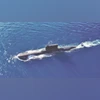 "Submarine")