Now to the back story. A number of residents who already lived in the Fujimidori neighbourhood weren’t happy about the negative impact the proposed condominium would have on the vista of a street named for its nice view of the revered mountain. Shortly after Sekisui House announced the project in February of 2021, complaints from locals started pouring in. In response, in September of that year, Sekisui House said it would revise its blueprints for the building, shrinking it from its originally planned 11-storey, 36.09 metres (118.41 feet) height down to 10 floors and 32.7 metres. But the locals pressed for a further reduction. However, in January of 2022, Sekisui House said the building dimensions had been finalised. The development plan was approved by the Kunitachi government that November, and construction began in January of 2023.
Earlier this month, Sekisui House did a volte-face. It informed the Kunitachi government that it would be demolishing the Grand Maison Fujimidori without any residents moving in, saying, “We did not sufficiently consider the effect on the surrounding area, including the scenery … we are voluntarily cancelling the project.” Wow!
Something like this wouldn’t have happened anywhere else in the world. Not in the US. Not in the Big Apple. A pencil-thin, 860-foot-tall building is, in fact, spoiling views of the Empire State from Lower Fifth Avenue. It is called 262 Fifth Avenue. Designed by a Russian firm named Meganom, it has 56 stories and contains just 26 apartments. For all intents and purposes, the new edifice has obliterated a large part of the Empire State building, which was once the tallest building in the world, and is without doubt a landmark of New York city.
New York has just one legally designated “view shed” — the panorama of Lower Manhattan across the East River, from the Brooklyn Heights Promenade. During the 1970s, residents of the Heights successfully lobbied the city to safeguard that vista. Authorities were starting to redevelop the Brooklyn waterfront at the foot of the Heights, raising fears about derelict warehouses giving way to high rises. Instead, the waterfront became Brooklyn Bridge Park, one of the glories of 21st century New York.
Urban and natural landscapes can be protected — and their beauty preserved — if there is the will and desire to do so. The Yabuli China Entrepreneurs Forum wanted to build a retreat up in the quiet and snowy mountains. What was conceptualised and created was a building inside a mountain forest, and presented as a place of power that embodies courage and wisdom. In addition to its main function, the building also serves as an exhibition space showcasing the history of Chinese entrepreneurship. The design of the centre resembles a canopy, slightly powdered with snow. And the silvery-white surface echoes the peaks of the mountains surrounding the building. Zero intrusion, by design.
The Fujimidori voluntary demolition would be unthinkable in India. We don’t even understand or appreciate the concept of visual pollution. Visual pollution refers to things that obstruct or detract from natural and man-made landscapes. Billboards or hoardings are the biggest culprits in Mumbai. They are all over the city, crowding its already overcrowded roads, hanging onto high-rises, and towering over colonies and communities. The Brihanmumbai Municipal Corporation (BMC) claims that there are only 1,025 legal hoardings in the island city that fetch it an annual licensing fee of ~100 crore. But the actual number exceeds the official count by at least a thousand per cent. Following the Fujimidori example, the BMC should announce a voluntary take-down scheme for illegal hoardings. Give a 30-day window for a self-initiated clean-up. And if they don’t act, the culprits (read owners), like in the Ghatkopar hoarding collapse case, should be sent to jail. Nothing less would be a deterrent.
The writer is chairman of Rediffusion


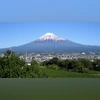 "Mount Fuji viewed from the south-southwest. Near Yamamoto, Fujinomiya City")