


Managing the rivers
Delhi floods show need for investment and preparation
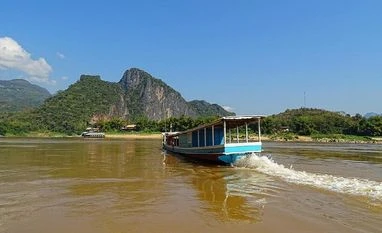 "Mekong River (Photo: Wikimedia commons)")
premium
Mekong River (Photo: Wikimedia commons)
Listen to This Article
The recent flooding in Delhi deserves careful investigation. Areas that had never before been flooded — even during periods of considerably heavier rainfall than has been the case this year — saw extensive property damage due to waterlogging. How did this come about? The government of Delhi has blamed the government of the neighbouring state of Haryana, and there appears to be some justification in this complaint. The Hathnikund barrage on the Yamuna, the upstream of where it flows through Delhi, is controlled by the Haryana government, and the decision was taken to release 350,000 cusecs of water after heavy rain further north. This water should have flowed through the three more barrages on the section of the river that adjoins Delhi, and through to Uttar Pradesh. But, it appears several gates of one of the three barrages — the ITO barrage, which is also operated by the Haryana government — had been silted up and could not be opened. As a consequence, the water spread out into various areas of the city that are normally not subject to such severe flooding. The Haryana government’s only response to this accusation has been to point out that Haryana also suffered from floods.