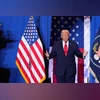
The President himself has been far more radical, resentful of the cases levelled against him in his time out of office and very willing to test and even break the bounds of presidential powers. The results domestically for the US have been dire indeed, with institutions such as the Federal Reserve besieged and likely to fall, and entire cities like Minneapolis thrown into chaos by the presence of unmarked, ununiformed, and apparently unaccountable federal agents terrorising their populations. Mr Trump openly speaks about the chances of an unconstitutional third term, various agencies of the US federal government openly hint at a white nationalist agenda in their messaging. His senior advisor Stephen Miller has argued in public that not just immigrants but also the children of immigrants are unwelcome in America.
For the rest of the world, the impact of the first year of the second Trump presidency has been similarly consequential. The President has used tariffs and market access as a brute-force club with which to try and beat allies and rivals alike into submission. He has gone out of his way to alienate those who have long been the US’ closest supporters, such as Canada and European countries. In the past week alone, he has threatened a military takeover of Danish territory, forcing Europe to discuss how it could protect itself against its treaty ally, and the Canadian Prime Minister has signalled that his country is moving significantly closer to China in order to deal with the consequences of an unfriendly US. The global efforts to control climate change have been a particular target of the administration’s ire: Domestic efforts to build renewable-energy capacity have been rolled back, the US has left the Paris Agreement, and, most recently, it exited multiple international bodies and frameworks, including the United Nations Framework Convention on Climate Change. The global economy exists in a state of uncertainty and confusion.
Some in India, when Mr Trump was re-elected, welcomed his arrival. They hoped a US that was more realist and transactional, and less moral and ideological, would be a fit partner for India. Such beliefs were soon laid bare. If anything, India has been a particular target for Mr Trump and his officials. The country has been exposed to the highest tariff rates currently applied, and attempts to negotiate a trade deal have run up against the wall of the President’s disregard. The question now is not how bilateral relations will improve under Mr Trump but what New Delhi can do to ensure that this partnership survives his presidency.


 "Donald Trump, Trump")