


House report reveals China's role in US fentanyl crisis, calls for action
Investigation reveals that nearly all illegal fentanyl ingredients are made by Chinese companies and then sent to Mexican drug cartels, which produce and distribute fentanyl in the US
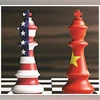 "US China, US China flag")
US China, US China flag (Representational)


Listen to This Article
A new investigation by the House Select Committee has exposed troubling details about China’s involvement in the fentanyl epidemic in the United States. The report reveals that nearly all illegal fentanyl ingredients are made by Chinese companies and then sent to Mexican drug cartels, which produce and distribute fentanyl in the US.
Shockingly, the report mentions that the Chinese government provides tax benefits to these companies, even though fentanyl is banned in both the US and China. Some of these businesses have even received financial support and official recognition from Chinese authorities. It was also discovered that state-owned companies, including a government-run prison, are linked to firms involved in drug trafficking.
The investigation further states that Chinese officials have deliberately interfered with US law enforcement efforts. In some cases, they allegedly tipped off fentanyl producers about American investigations, allowing them to evade justice. While China punishes drug trafficking within its borders, it reportedly ignores companies exporting illegal drugs to other countries.
Fentanyl is now the leading cause of death for US citizens aged 18-45. The report suggests that China benefits strategically and economically from the crisis by enriching criminal organisations and undermining the US.
To tackle the issue, the Select Committee has called for urgent action. Recommendations include creating a Joint Task Force, imposing stricter sanctions, and enforcing tougher trade policies. While US-China talks on the matter have taken place, the report warns that stronger, united efforts are needed to address what has become one of America’s deadliest drug crises.
Also Read

 "Donald Trump, Trump")
 "Donald Trump, Trump")
 "Donald Trump, Japan PM Shigeru Ishiba")
 "import, export, trade, US trade, tariff")
 "Katherine Tai")
US-China trade war and recent issues
This report comes at a time when the US and China are already engaged in a trade war. It is characterised by reciprocal tariffs and trade barriers.
On March 3, 2025, US President Donald Trump implemented new 25 per cent tariffs on imports from Mexico and Canada, while raising levies on Chinese goods by another 10 per cent, initiating new trade disputes with the three primary US trading partners.
In response, China imposed a 15 per cent tariff on US agricultural products such as chicken, wheat, corn, and cotton, and a 10 per cent tariff on sorghum, soybeans, pork, beef, aquatic products, fruits, vegetables, and dairy products, effective March 10, 2025.
To counter the effects of US tariffs, China increased its fiscal stimulus to boost domestic consumption and protect its economy. Chinese President Xi Jinping emphasised the need to strengthen domestic demand in light of global changes impacting China’s trade, science, and technology sectors.
The trade dispute began in 2018 under President Donald Trump, who imposed tariffs on Chinese goods to address trade imbalances and alleged unfair practices. China responded with its tariffs, leading to a series of escalations that have impacted global markets.
[With inputs from ANI]
More From This Section
 "China, Chinese, youth, workers, employment")
 "US China flag, US-China flag")
 "Shimadzu Corp's world's most accurate clock optical lattice clock")
 "President Donald Trump addresses a joint session of Congress at the Capitol in Washington")
 "Oil refinery, Oil production, Crude oil")
Topics : US trade deals US China trade war US China import tariffs Donald Trump administration BS Web Reports
Don't miss the most important news and views of the day. Get them on our Telegram channel
First Published: Mar 05 2025 | 5:12 PM IST