Auto companies may face 10-12% price increase for half-yearly contracts

Auto executives confirmed that negotitations between steel companies and major automakers - Maruti Suzuki, Hyundai and Mahindra & Mahindra - are in final stages
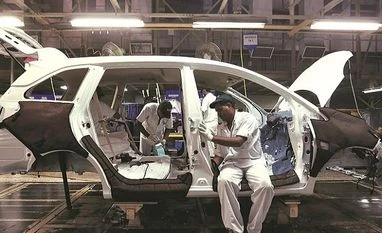
car, automobile, manufacturing, jobs, tech, automation
A hike in steel price will exacerbate problems for automakers who have been facing a slowdown in demand for more than a year
Ishita Ayan DuttArindam Majumder Kolkata/New Delhi
4 min read Last Updated : Aug 04 2020 | 6:10 AM IST
Automakers — coming out of lockdown lows — are likely to face a 10-12 per cent price increase for half-yearly contracts with steel companies. After months of negotiations, some firms have sealed contracts, but most have decided to defer the increase to October.

Ranjan Dhar, chief marketing officer, AMNS India (ArcelorMittal Nippon Steel India), said the firm had settled half-yearly contracts with a few automobile companies. 

“We are seeing a demand recovery in auto which is better than expected. Demand for small car is pulling up, as people are opting for personal mobility,” Dhar said. However, it is understood that though AMNS India had sealed contracts for April to September, the implementation was likely to be during October to March.

Auto executives confirmed that negotitations between steel companies and major automakers — Maruti Suzuki, Hyundai and Mahindra & Mahindra — are in final stages. “We would like raw material costs to be stable, which will allow us to maintain stable vehicle pricing to the end consumers when the industry is trying to come out of the crisis. We are still objecting to it,” said a procurement and sourcing head of an auto firm.

He said the steelmakers hadn’t passed the complete benefit to auto companies when prices had dropped in October. “We are still resisting citing that,” he added.

On an average, a car uses about 700 kg of steel, which is around 10 per cent of the total cost of an entry-level car. “If prices are increased, there will be no other alternative but to pass on the cost to customers. This will further impact consumer demand,” a sales head of a four-wheeler maker said, adding that steel companies are taking undue advantage of the minimum import duties put in place to protect them from cheap imports. Spokesperson of Maruti Suzuki and Hyundai refused to comment.

A hike in steel price will exacerbate problems for automakers who have been facing a slowdown in demand for more than a year. The pandemic has worsened the situation and only recently, there have been soft signs of recovery.

The contracts between steel and automobile firms are half-yearly. The contracts for H2 (second half of 2019-2020) got over in March. Negotiations were to start from April but the nationwide lockdown postponed it a bit, with discussions restarting around June. For H2, steel companies had dropped prices by 11-14 per cent to support automobile companies, reeling from the slowdown.

Sources said a 10-12 per cent hike would translate to an increase of Rs 4,800-5,500 a tonne. The roughly 10-million tonne automotive steel demand is largely met by Tata Steel, Tata Steel BSL, JSW Steel, Essar Steel, Posco, and some long product producers. Steel accounts for 50 per cent of a car’s weight; for two-wheelers, it is lower.

Sung Lea Chun, Posco India managing director, said: “We have started discussions for October to March contract. We are trying to increase prices because raw material prices have increased and steel prices have also increased.”

In the past two weeks, iron and pellet prices have moved up; spot steel prices, too, have moved up to close to pre-Covid levels of March.

Seshagiri Rao, JSW Steel’s joint managing director and group chief financial officer, said prices for April to September had been rolled over, so actual increase will happen from October. “Generally, auto contracts are for six months. So, April, it was supposed to be negotiated up to September, but considering the market environment, we rolled over prices. The actual increases will happen from October,” he had said.  

Tata Steel, however, is understood to be still negotiating the April to September contract and the price revision will be implemented as soon as discussions conclude.

For half-yearly contracts, prices of the previous period are generally taken as a reference point. Between November 2019 and March, steel prices had increased more than Rs 5,000 a tonne, while steelmakers had dropped prices by Rs 6,000 a tonne for H2 FY20.


One subscription. Two world-class reads.

Already subscribed? Log in

Subscribe to read the full story →
*Subscribe to Business Standard digital and get complimentary access to The New York Times

Smart Quarterly

₹900

3 Months

₹300/Month

SAVE 25%

Smart Essential

₹2,700

1 Year

₹225/Month

SAVE 46%
*Complimentary New York Times access for the 2nd year will be given after 12 months

Super Saver

₹3,900

2 Years

₹162/Month

Subscribe

Renews automatically, cancel anytime

Here’s what’s included in our digital subscription plans

Exclusive premium stories online

  • Over 30 premium stories daily, handpicked by our editors

Complimentary Access to The New York Times

  • News, Games, Cooking, Audio, Wirecutter & The Athletic

Business Standard Epaper

  • Digital replica of our daily newspaper — with options to read, save, and share

Curated Newsletters

  • Insights on markets, finance, politics, tech, and more delivered to your inbox

Market Analysis & Investment Insights

  • In-depth market analysis & insights with access to The Smart Investor

Archives

  • Repository of articles and publications dating back to 1997

Ad-free Reading

  • Uninterrupted reading experience with no advertisements

Seamless Access Across All Devices

  • Access Business Standard across devices — mobile, tablet, or PC, via web or app

Topics :automobile industryautomobile manufacturer

Next Story



