Home / Industry / Auto / Passenger vehicle sales still facing brunt of chip shortage, says FADA
Passenger vehicle sales still facing brunt of chip shortage, says FADA
According to the FADA data, if the overall sales figure is compared with the January 2020 figure, when automobile companies sold 1.76 million units, the decline is over 18 per cent.
2 min read Last Updated : Feb 07 2022 | 11:18 PM IST
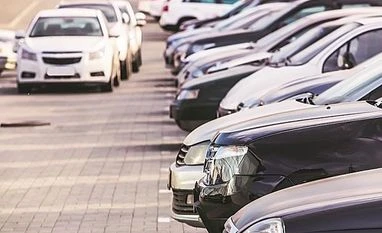
Passenger vehicle (PV) registrations saw a 10 per cent year-on-year (YoY) decline to 258,329 units in January as against 287,424 units last year, mainly because of supply-side issues like the continuing scarcity of semiconductor chips, according to released by the Federation of Automobile Dealers Associations of India (FADA), the apex body of auto dealers.
In terms of monthly retail sales, January continued to be weak as overall retails fell by around 11 per cent on a YoY basis to 1.43 million. According to the FADA data, if the overall sales figure is compared with the January 2020 figure, when automobile companies sold 1.76 million units, the decline is over 18 per cent.
Two-wheeler retails declined by 13 per cent and tractors by 10 per cent in the month, compared with the previous year.
However, three-wheeler and commercial vehicle sales went up by 30 per cent and 21 per cent, respectively, in January.
“The month of January continues to show weak performance as overall retails on a YoY basis, fell by 10.7 per cent, while there-wheelers and CV continues to remain in green with a growth of 30 per cent and 20.5 per cent, two-wheeler, PV and tractors closed in negative with degrowth of -13 per cent, 10 per cent and 10 per cent, respectively. Auto retail’s weak performance of 18.4 per cent compared to January 2020 (a pre-Covid month) continues to show that India is yet to recover from Covid,” said FADA President Vinkesh Gulati.
However, Gulati said he believes that as the impact of the Omicron variant of novel coronavirus has not been as severe as expected, the fortunes of the industry will turn positive.
“As India gets back on its feet post the third wave of Covid, we expect that auto retail will slowly turn positive. Semiconductor shortage is also showing some signs of easing as many PV [original equipment manufacturers] assure of better dispatch. We, hence, expect vehicle availability to improve going ahead,” FADA said.
FADA said the announcement in the Union Budget of developing 25,000 kms of new highways will further push infrastructure spending, thus resulting in an increase in CV sales. Added to this, FADA said, some traction is also being witnessed in replacement demand after a period of two years.