With states unlocking, auto manufacturers crank up production in June

Expect to reach up to 90% of pre-Covid 2.0 levels
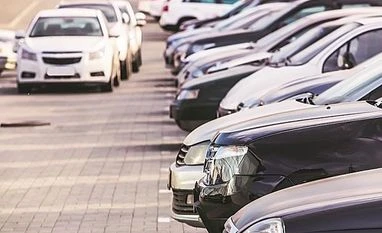
used car, second-hand cars, auto demand, automobile, cars, vehicles
The resurgence in confidence is based on the expectation of a gradual recovery that has come on back of a fall in the number of covid-19 cases along with latent demand.
Shally Seth Mohile Mumbai
4 min read Last Updated : Jun 12 2021 | 2:19 AM IST
By the end of June, most auto firms expect to manufacture 85-90 per cent of what they produced in the months preceding the second wave.

After the unlock 1.0 that happened in May 2020, carmakers started ramping up production month-on-month from June 2020 and continued doing so till April 2021, the month the second wave hit. 

The resurgence in confidence is based on the expectation of a gradual recovery that has come on back of a fall in the number of covid-19 cases along with latent demand.

The confidence is based on the expectation of a gradual recovery and latent demand.

“We will reach our full daily rate of production before the end of this month. There is enough demand with over 150,000 pending bookings and new bookings coming in. It will be busy days ahead for the dealerships,” said R C Bhargava, chairman,  Maruti Suzuki.   

However, he pointed out that fear of the ‘third wave’ remains and both ‘vaccinations and observance of safety protocols’ are necessary to ensure a rapid recovery.

Even though factories were allowed to operate with minimal manpower amid restrictions, several companies including Maruti halted production for two to three weeks.

Most companies resumed production last month but they timed their ramped up production schedule to coincide with the gradual unlocking in some states which began on June 1.

With a third of the country still under lockdown, including Karnataka, West Bengal, and Tamil Nadu, carmakers are treading with utmost caution.

“With 70 per cent of the country open, 70 per cent of the demand has also come back,” said Tarun Garg, director, sales and marketing at Hyundai Motor India.

He expects further improvement by the month end but this will depend on whether more states lift lockdowns or extend them.

“Though earlier bookings are lined up and new ones also coming, it’s too early to make any projections as there are developments on re-opening every day and this is the first week,” said Garg.   

Ashish Modani, vice president and sector head, corporate ratings, ICRA, pointed out that, in line with expectations, covid 2.0 induced lockdown restrictions across key states have resulted in a sharp decline in wholesale despatches during May.

“While the lockdown situation is easing, the ramp up in volume is likely to be gradual, unlike the fast-paced V-shaped recovery witnessed during the last fiscal," said Modani.

Passenger vehicle dispatches to dealers in May rose year-on-year to 88,045 from 33,546 in May 2020 , said the Society of Indian Automobile Manufacturers on Friday.  

However, since 2020 was a year when the pandemic disrupted everything, a comparison with 2019 gives a more accurate  picture.  Sales fell by over 50 per cent in most categories when compared with 2019.

Jayant Davar, co-chairman and managing director, Sandhar Technologies (an auto component firm that makes aluminium die casting, lighting and other critical parts), said that even though production may catch up with the peak months of January and March by month-end, the full month of June will still be only two-thirds of what it was in the peak months. “Production is directed more at individual companies than the whole sector,” he said.

Various companies including Royal Enfield, Hero MotoCorp, Honda Motorcycle and Scooter India, and TVS that have units in southern India, have seen production being halted due to the continuing lockdowns.

The June quarter will perhaps be only 40-60 per cent in revenue terms (the value of business from OEMs), according to  Davar.  

Others are also reluctant to read too much into what is a gradual uptick in production, the reason being that the production ramp up happening now is mainly in the nature of  ‘pipeline filling’ because  automakers have to stock up the dealerships.

The inventory at most dealerships has depleted to 20 days from the normal 25 days, said an official at a component maker. “The real test will be the retail performance of companies in the months ahead,” he said.

One subscription. Two world-class reads.

Already subscribed? Log in

Subscribe to read the full story →
*Subscribe to Business Standard digital and get complimentary access to The New York Times

Smart Quarterly

₹900

3 Months

₹300/Month

SAVE 25%

Smart Essential

₹2,700

1 Year

₹225/Month

SAVE 46%
*Complimentary New York Times access for the 2nd year will be given after 12 months

Super Saver

₹3,900

2 Years

₹162/Month

Subscribe

Renews automatically, cancel anytime

Here’s what’s included in our digital subscription plans

Exclusive premium stories online

  • Over 30 premium stories daily, handpicked by our editors

Complimentary Access to The New York Times

  • News, Games, Cooking, Audio, Wirecutter & The Athletic

Business Standard Epaper

  • Digital replica of our daily newspaper — with options to read, save, and share

Curated Newsletters

  • Insights on markets, finance, politics, tech, and more delivered to your inbox

Market Analysis & Investment Insights

  • In-depth market analysis & insights with access to The Smart Investor

Archives

  • Repository of articles and publications dating back to 1997

Ad-free Reading

  • Uninterrupted reading experience with no advertisements

Seamless Access Across All Devices

  • Access Business Standard across devices — mobile, tablet, or PC, via web or app

Topics :Auto firmsAuto component productionHero MotoCorp

Next Story



