Agrochemicals should get same tax benefits as other farm inputs: MK Dhanuka

Making pesticides economical, by removing excise duty & VAT, would help in raising farm productivity
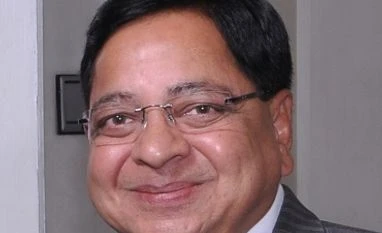
M K Dhanuka, MD, Dhanuka Agritech
M K Dhanuka
Last Updated : Jan 21 2017 | 2:00 PM IST
Agriculture is the mainstay of the Indian economy because of its high share in employment creation and GDP. The sector accounts for 17 percent of India's GDP and employs almost 53 percent of the country's workforce.

India is the fourth largest global producer of agrochemicals after the US, Japan and China. This segment generated a value of $ 4.4 billion in FY15 and is expected to grow at 7.5 percent per annum to reach $ 6.3 billion by FY20. Approximately 50 percent of the demand comes from domestic consumers and the rest from exports. During the same period, the domestic demand is expected to grow at 6.5 percent per annum and exports at 9 percent per annum.

Going forward, Indian agrochemicals market will be driven by growth in herbicide and fungicides, increasing awareness towards judicious use of agrochemical, contract manufacturing and export opportunity. At present, per hectare consumption of pesticide in India is among the lowest in the world and stands at 0.6 kg per ha against 5-7 kg per ha in the UK and about 17 kg per ha in Taiwan. With the increase in awareness and market penetration, consumption is likely to improve in the near future.

With this year’s budget we have several expectations in order to boost the economy which in turn will help India achieve the national goal of food security and doubling the farm income.

Plant protection chemicals play an important role in reducing wastage and losses of food. It is an important farm input. Every year, crops worth crores are wasted due to pest attacks and diseases. According to the 37th standing committee report on petroleum and chemicals (2002) the total losses caused by weeds, insects, diseases, rodents, etc in India is roughly 28 percent of our production of food grains amounting to Rs 90,000 crore. Over the years, this may increase. In other words, the production of food grains in 2002-03 was 174.8 million tonnes and the losses were amounting to Rs 90,000 crore, with present MSP these losses would be much more approximately Rs 250,000 to 300,000 crore per year.

We expect the budget to make provisions for a sizable funds for agriculture as well as on new technological education and training of farmers. Even today, large segment of Indian farmers are unaware of the new technologies available to them. It is important to educate the Indian farmer on the various effective plant protection products that are available at his door-step, so that he can increase his yield per hectare and hence, his income.

Pesticides industry should be given the same tax benefits as other farm inputs, so that they are more affordable. Excise duty reduction on agrochemicals is an important area where we expect Government to give serious thought and take a positive step in this direction, in order to support better yield. Currently, there is no excise duty on seeds, fertilisers and farm equipment, while pesticides attract 12.50 percent excise duty. Due to the excise and VAT burden, pesticides become costly for farmers. Removal of excise duty and VAT would make pesticides more economical for farmers which would further help in increasing productivity.

Demonetisation has had 10-15 percent negative impact on the agriculture sector which is largely cash driven. Due to shortage of new currency in the system, farmers have not been able to purchase agri-inputs on time and at the same time the demand for pesticides has also been impacted.

Provisions in the Union Budget 2016 regarding crop insurance, issuance of soil health cards, e-market platform and budget allocation for development in agriculture and rural sector were encouraging. However mechanism for proper implementation of these schemes will be the key for success of these schemes and ultimately for the Indian agriculture. 

If the demands of the industry are fulfilled in union budget 2017, the income of farmers will increase due to the increase in productivity which will ultimately add in the GDP growth. The huge losses due to pest and diseases will be checked to a large extent which will improve farmers’ financial condition and fulfill government’s vision of doubling income from agriculture.
________________________________________________________________________________________________
M K Dhanuka is the managing director of Dhanuka Agritech

One subscription. Two world-class reads.

Already subscribed? Log in

Subscribe to read the full story →
*Subscribe to Business Standard digital and get complimentary access to The New York Times

Smart Quarterly

₹900

3 Months

₹300/Month

SAVE 25%

Smart Essential

₹2,700

1 Year

₹225/Month

SAVE 46%
*Complimentary New York Times access for the 2nd year will be given after 12 months

Super Saver

₹3,900

2 Years

₹162/Month

Subscribe

Renews automatically, cancel anytime

Here’s what’s included in our digital subscription plans

Exclusive premium stories online

  • Over 30 premium stories daily, handpicked by our editors

Complimentary Access to The New York Times

  • News, Games, Cooking, Audio, Wirecutter & The Athletic

Business Standard Epaper

  • Digital replica of our daily newspaper — with options to read, save, and share

Curated Newsletters

  • Insights on markets, finance, politics, tech, and more delivered to your inbox

Market Analysis & Investment Insights

  • In-depth market analysis & insights with access to The Smart Investor

Archives

  • Repository of articles and publications dating back to 1997

Ad-free Reading

  • Uninterrupted reading experience with no advertisements

Seamless Access Across All Devices

  • Access Business Standard across devices — mobile, tablet, or PC, via web or app

Next Story



