Publisher: Harper Collins
The invisible scars of the pandemic are everywhere. Anxiety, inflexible household budgets, frail bodies and weak lungs and, a sense of foreboding that laces even the most routine and mundane tasks—the immediate threat of the Coronavirus may be receding, but its sting lingers on, much like the sloughed skin of a poisonous snake.
None of that, however, even begins to compare with the festering wounds that the pandemic has left behind among domestic migrant workers. Their lives, already hanging by a thread, were upended overnight by the spate of lockdowns, forcing them to abandon their shanties and footpaths in the city and walk unimaginable distances, without food or water, to get back home.
Home was anywhere between 500-1000 miles for those who embarked on the journey, a distance few had ever walked before or will ever attempt again. But when they did pound the streets, in the early days of pandemic-induced lockdowns; with elderly parents and children beside them and, even after being thrashed and tear-gassed by cops on lockdown duty, their stories became impossible to ignore.
Even now, even as the immediate threat of the Coronavirus recedes, the shock of the long journey home and the loss that it inflicted upon the community—of livelihood, lives and dignity—remains an open sore. It would take the most hardened set of leaders to turn their faces away from the migrant crisis that continues to play out in different ways, in different parts of the country.
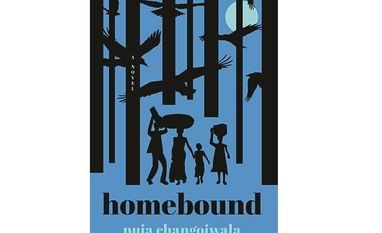
The story of the long walk home is the subject of Homebound, a book that addresses the pain and devastation caused by the lockdowns. It treats the journey like a defining moment in the lives of migrants, one that exposes the callousness of policymakers and the fragility of urban-rural relationships.
The poorest and most vulnerable sections of society have been the worst hit over the past two years, but it’s not the pandemic’s fault alone. An indifferent state, corrupt officials and uncaring employers and a hate-mongering media played their parts too. Author Puja Changoiwala uses her journalistic gaze and reporting skills to tell this story, relaying it through the eyes of a 15-year-old girl, Meher.
Meher is a fictional composite of real characters—people that Ms Changoiwala met and interviewed for the book. Meher lives in one of Asia’s largest and densest slums, Dharavi in Mumbai, and her family decided to walk nearly 900 miles to Balhaar, a village in Rajasthan that her parents called home.
Like Meher, many other lives became collateral damage in the fight against Coronavirus. Ms Changoiwala prods readers to question why this happened and also ask what is the meaning of home? Through the people Meher encounters on the trek home and the routine skirmishes with corrupt officials, the author examines the loss and pain inflicted on families who risked everything to go back home.
Questions lead to more questions. How did the old and the frail find the strength to walk miles under the sun? How did children survive the trudge back to the villages? And is there any way to justify the indignities heaped upon the workers, all in the name of strong leadership?
Domestic migrant workers are rarely mentioned, let alone written about in India. Employed as drivers, construction workers, security guards, maids and such other professionals, they populate the large informal sector in the country. Until the pandemic forced them out on the road, they were little more than a data point for telecom companies and a statistic for UIDAI officials stamping their Aadhaar cards.
Their individual lives were not of much consequence. Their moment of distress is what forced them to shed their cellophane existence, bringing their poverty and helplessness into sharp focus. This book, therefore, needed to be written. It helps acknowledge the physical and mental trauma of the workers and could, perhaps, lead to more books that further distil the economic and social impact of the virus that has, in its aftermath, left behind a society even more unequal and divided than before.
Given the nature of the story and the ambitious task at hand, however, this book could have done more by doing less. It takes on several issues that have long fascinated writers who write about Indian society — the premium placed on fair skin and sons, the native wisdom of women in villages, child marriage, the perils of over-urbanisation and man-animal conflict. None adds value to the human story of the crisis that the book set out to cover; instead, it ends up creating cliched pronouncements and shallow arguments.

 "A long march to impoverishment")












 Connect with us on WhatsApp