All said and done, the top French wines are still considered the best wines in the world — not just because their perceived quality (and price) beats all pretenders from the rest of the world (the Judgement of Paris tastings notwithstanding) — it’s also about perceived quality, which is why they command 85 per cent of investments going into wine, with Italian wines accounting for 8 per cent and “all the rest” a measly 7 per cent.
In part, this is because the values of fine wines fluctuate over time and vintage , unlike in India, their prices are not set in stone: you will never find an “MRP” (Maximum Retail Price) on wines overseas. So people buy wines not just to store and drink when the time is right, but also to invest in , although, like shares, prices may go down as well as up. Given high volatility and the difficulty of predicting prices in this market, people tend to focus investments on the wines forecast to appreciate in value: the top wines from Bordeaux and Burgundy (Lafite, Latour, Margaux, Haut-Brion, Mouton Rothschild, Romanee-Conti and so on); vintage Champagnes (Dom Perignon, Krug, Bollinger, Cristal); Super Tuscans (Tignanello, Ornellaia, Sassacaia, Brancaia) and some Barolos; the Iconic and Luxury wines from Penfolds of Australia; and Vega Sicilia Unico Gran Reseva from Spain.
Which doesn’t mean that French wines cannot go wrong: indeed, there is so much wine made in France (4.67 billion litres in 2014, equal to nearly 520 million cases) that lots of the wine is inevitably “plonk”, and woe betide the unwary consumer who thinks that Bordeaux Superieur bought at ^10 will give good value.
Of course the quality of the top French wines is legendary: go to Wine Spectator’s ratings search and check any region — France has 33 wines rated at 100 points, Italy 14, Portugal 9 (all Ports), Germany 8 Rieslings, and California and Australia only 2 each. And while the Wine Spectator points cannot be the only criteria to evaluate a wine (price and availability are as important), they certainly indicate that there are more top-rated wines from France than anywhere else.
What of French wines in India? Star hotels are the only places where one will find the best French wines — of course priced out of sight. Only a limited selection is available at retail and in restaurants: the ubiquitous Moet Chandon Champagne, some wines from the Rhone, a few Chablis, some generic wines from Bordeaux (Chateau Foofoo, I call them) and Southern France, and that’s it. Let’s hope that changes.
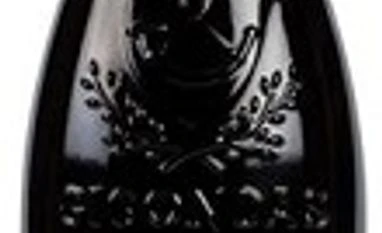
Wine I’ve been drinking: The Chateau de Saint Cosme, in the southern Rhone, is located on the site of a 2,000-year-old Roman villa and has been owned by the same family (the Baurrols) since 1570. The 2010 vintage of their Gigondas label was #2 on Wine Spectator’s Top 100 list of 2011, a very big deal indeed.
The wine itself (90 points by Robert Parker —Rs 6,311 in Bengaluru) is almost black in colour, a typical Rhone blend of Grenache, Mourvedre, Syrah, and Cinsault, with complex aromas of berries, black pepper, spice, and currants and a full-bodied and complex taste that lingers.
Alok Chandra is a Bengaluru-based wine consultant

 "<b>Alok Chandra:</b> Why French wines rule")












 Connect with us on WhatsApp