Sandip Ray on the appeal of Pather Panchali 60 years on
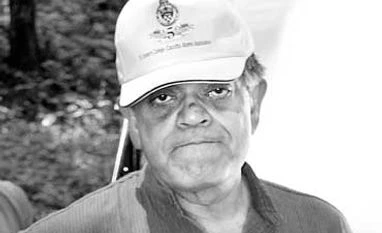
On Pather Panchali's 60th anniversary, Sandip Ray, film maker and Satyajit Ray's son, explains the film's universal and timeless appeal
Kamalika Ghosh What is striking is that Pather Panchali looks so fresh even after 60 years. This is very interesting. One of the reasons behind its overwhelming popularity could be that the film was a welcome change from the studio-bound films that were made during those days. The film had extensive outdoor shoots. And not merely outdoor locations, Satyajit Ray dared to make a film with an extremely amateur cast.
But the primary reason for its appeal, I think, would be the story. It's extremely interesting with a nuanced take on human relationships. A very important part of Ray's lexicon of film making was his emphasis on a multi-layered film. He believed that a film should be made in such a way that it should appeal to all audiences, cutting across age and time.
The way I viewed the film as a child should be different from the way I viewed it as an adolescent, which is again not similar to how I view it now. One must be able to discover new things in every viewing. That is how he believed one should make films. That's why, I suppose, classic films are extremely heart-warming. They are evergreen.
A film maker, while adapting literary works, often works on the original or adds value at times. But Ray categorically stated everywhere that he was heavily indebted to Bibhutibhushan Bandyopadhyay's original work. He completely adhered to the original descriptive parts written by Bandyopadhyay. Since Bandyopadhyay was very visual, his dialogues were impeccable, and hence Ray chose Pather Panchali as his first film.
When the film was released, it hardly made any impact. Word of mouth paved the way for Pather Panchali's success. This made it a huge hit. And it still is popular. Very recently, the entire trilogy was restored.
Initially, Ray faced a lot of problems with funds to make the film. No private producer was willing to fund it. They said a film with such extensive outdoor shooting would not be commercially viable. Then the government came forward.
The advertising agency where Ray used to work had sent him to London where he watched a lot of good cinema. One of them was The Bicycle Thief. He was completely mesmerised by the film that was shot extensively outdoors, with an absolutely amateur cast. Then he thought it would be interesting to make such cinema for the Indian audience as well.
There has been some criticism that the film tries to sell poverty to the Western imagination. But I think it is not true. Baba made a number of films, out of which perhaps a few deal with poverty. The film's success is not due to the fact that it romanticises poverty - it is due to the fact that it deals with nuanced characters and is a heart-warming tale of human relationships. And this is precisely why the film was lapped up by the western audiences as well as the Indian audiences, and the trilogy is being rediscovered.
The film was first shown in the Museum of Modern Art, New York, in 1955, much before it was released in Calcutta. And in this May, after 60 years, the museum re-screened the film. It was a full house. The American audiences, both the previous generations as well as the present one, have greatly appreciated the film.
As a viewer, I believe the award that Cannes bestowed on Ray was a very appropriate one. It is a brilliant human document. And it still moves you. We still see people leaving the screens with wet eyes and handkerchiefs. It's the same reception that it had got 60 years back. It has even this year got rave reviews. I believe that a large part of the credit for its success goes to the trio of Ray, Bansi Chandragupta (art director) and Subrata Maitra (director of photography). And the three of them together created magic. I would call it inspired cinema.
FIRST IMPRESSIONS
An excerpt from Pather Panchali's first review |
THERE IS NOTHING GLIB OR FLASHY HERE. There is nothing effusive. Nothing spills over the edges. The images speak and we listen with our eyes. A village is going to pieces. We see the bones as also the heart of its life, and sense its changing rhythms and moods. ...
This is the world of Pather Panchali, ...It will be fatuous to compare it with any other Indian picture, for even the best of the feature films produced so far have been cluttered with cliches. Pather Panchali is pure cinema. ...
Pather Panchali marks a complete break from the world of make-believe, a melange of impossible situations and a language which is alien to the cinema. ...
No Indian director has, of course, ever sought to achieve the stunning visual impact which the young artist in Satyajit Ray, the maker of Pather Panchali, has. He has an uncanny eye for the scene and for the people. He composes his shots with a virtuosity which he shares with only a few directors in the history of the cinema. ...
What makes Pather Panchali a work of art is the control that Satyajit Ray exercises on his material. He never allows his tense scenes to disintegrate into melodrama or lets his lyricism slip into sentimentality. Everyone is without a mask. Nothing is stereotyped. ...
He looks at life with kindly and indulgent eyes. But he uses these with greater elan than we thought possible on the Indian screen. And this is his first picture.
- Sham Lal, The Times of India, February 10, 1956 |
BEHIND THE SCENES
Pather Panchali's fact file |
- The soundtrack and score was composed by Ravi Shankar, who used classical ragas
- The West Bengal government gave a loan to Ray for the film and recorded it as one for "roads development"
- A special screening was attended by Jawaharlal Nehru and Bidhan Chandra Roy
- This was the first installment of the Apu Trilogy; the others were Aparajito (1956) and Apur Sansar (1959)
- The film won the Best Human Document award at the Cannes Film Festival in 1956
- The child who plays Apu, Subir Banerjee, was spotted by Ray's wife, Bijoya, while he was playing on the neighbour's terrace
- The 2014 Bengali film, Apur Panchali by Kaushik Ganguly, is a poignant narration of the life Banerjee after Pather Panchali
- Bandyopadhyay's Nishchindipur village, where the story is set, was recreated in Boral on the outskirts of Calcutta
- A fire in 1993 destroyed the original negatives of the film in London.
- Janus Films released 4,000 restored versions of the Apu Trilogy with new subtitles in May 2015
- The narrative style of the film was influenced by Italian neo-realism
|

 "Sandip Ray on the appeal of <I>Pather Panchali</I> 60 years on")


 Connect with us on WhatsApp