As the “no waste” food movement gains steam, top chefs keep finding practices that go back centuries. Long before bouillabaisse began showing up on Michelin-starred menus, it was a hearty French stew made using the odds and ends of fish; likewise, the ancient inventors of coq au vin found a way to soften up old roosters by cooking them in wine.
Now another modest culinary tradition is getting a makeover. Grano arso, translated literally as “burnt grain,” has become prized for the earthy, toasty flavour it gives pastas and breads. “It’s a nuttiness that envelopes you,” says Kevin Adey, who uses it to make a smoky orecchiette at his restaurant Faro in Brooklyn.
Burnt flour may sound like a kitchen accident, but it’s an ingredient steeped in the history of Puglia, in the south of Italy. Origin stories trace its heritage to poor, 18th century villagers who would harvest the scorched grains that remained after farmers burnt their fields to make way for new crops. Others claim it was the burnt flour collected off the floor of communal ovens after loaves were baked. Both are likely correct.
One of the alluring characteristics of burnt flour is that it tricks you. The colour gives pasta a charcoal hue and turns bread loaves a chocolate brown when split open, yet instead of sharp, ashy overtones you get hints of coffee and popcorn.
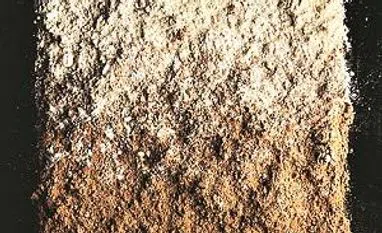
A gradation of grano arso
And, as with the revolution in coffee-bean roasting, some professional kitchens are investing in their own mills to geek out on the process, start to finish, giving cooks the opportunity to expand the flavours they can extract from grains. In Philadelphia the James Beard-winning chef Marc Vetri toasts wheat before milling it for use in dishes such as focaccia with smoked fish and créme fraîche. For the pappardelle at the Michelin-starred SPQR in San Francisco, chef Matthew Accarrino chars pre-milled grains by first baking them, then uses a kitchen torch so they’re well-blackened. “Burnt flour pairs really well with sweet flavours and is pumped up when you add fat, like cheeses,” he says.
At Washington’s Masseria, chef Nicholas Stefanelli is taking the process one step further. “When we burn our flour, it caramelises the starches, giving it a deep, bittersweet quality that’s incredibly distinct.” At Officina, his new Italian marketplace opening this spring in the Wharf, he’ll sell fresh grano arso pasta, as well as the burnt flour itself.
The trickle-down from chef to consumer is being felt at marketplaces such as Eataly’s Downtown New York location. Head baker Stephanie Tantillo, who arrived last June to bolster the bread program, has added a $3.80 charred loaf to the product line. She starts by aggressively toasting flour in the nearby pizza oven, stirring it often. She’s discovered that customers have a ceiling on how blackened they want their food to be. “When we changed the description from burnt to charred, sales tripled,” she says.
Imported orecchiette from Pastificio Alta Valle Scrivia
Home toques can use it, too. In the $500 five-volume Modernist Bread, which came out in November, authors Nathan Myhrvold and Francisco Migoya suggest using burnt flour in pizza dough to mimic the flavour of a charred Neapolitan crust. The recipe directs cooks to toast flour on a parchment-paper-lined sheet at 400F until black and then cut it with regular flour.
Mitchell Davis, executive vice president of the James Beard Foundation, says it’s unusual for an ingredient that has such strong associations with poverty to become popular in Italy. But the options for grano arso keep expanding: A recipe on the Italian food blog Cravatte ai Fornelli now suggests making cookies from burnt flour and filling them with tomato cream for a savoury whoopie pie.

 "Chefs are burning your food on purpose; Italian ingredient gets ambitious")

