Determined to succeed
A capacity for hard work and a realistic attitude to life and employment make the people of Gujarat leaders in the fields of business and politics
T Thomas Different regions of India have produced different leaders - spiritual, administrative, literary, philosophical. Gujarat perhaps can be upheld as the land that has given us great business and political. Names like M K Gandhi, Vallabhbhai Patel, Dhirubhai Ambani and now Prime Minister Narendra Modi readily remind us of Gujarat's stalwarts. Gujarat has 60 million, or 5 per cent of the country 1.2 billion people, yet has given India more than its share of leaders in different spheres. What is it that helps the people of Gujarat ascend to these top levels?
The first thing you notice about Gujaratis is that they are usually mild-mannered and soft-spoken. But behind the politeness, the Gujaratis are people of immense determination with a willingness to be patient to achieve their goals. This was eminently illustrated by Gandhiji in his struggle against the British for India's independence. Another strength is the capacity of Gujaratis to give up luxury and opt for austerity. The simplicity of their needs is perhaps ingrained in them because Gujarat hasn't always been a prosperous state. Minimising use of and preserving vital resources, like water, comes naturally in a situation of limited availability or deprivation.
Because Gujarat's geography has not been uniformly blessed by nature, from time immemorial its people have migrated to other parts of India as well as to all parts of the world. And because of their friendly nature combined with their shrewdness and frugality, they have proved remarkably successful in trade and business wherever they have set foot. This is in sharp contrast to people from some of the more populous states like Uttar Pradesh, Madhya Pradesh and Bihar.
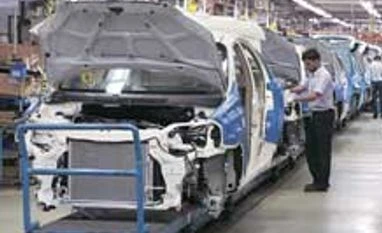
The willingness of Gujarat's people to accept the authority of employers and cooperate with owners of enterprises is a major reason for the relatively rapid and successful industrialisation of the state. Labour there is not only intelligent and hardworking, but also realistic enough to recognise that livelihoods and prosperity depend on the survival and profitability of the enterprise that employs them. This is in sharp contrast to the attitude of labour in places like Kerala and West Bengal. It is no wonder that industrialists prefer to locate their manufacturing units in Gujarat. In a similar way, the state government too does not view the private sector with suspicion and antagonism.
This attitude coupled with the Gujarati's mild sense of ego seems to have helped the state reach its level of success. A Gujarati is willing to accept the merits of his fellowmen and is, therefore, willing to cooperate to achieve common goals. This is well illustrated by the outstanding success of Amul and other milk co-operatives in Gujarat. Perhaps, V Kurien might not have achieved the success Amul did in Gujarat if he had started the milk cooperative in his native Kerala.
However, in contrast to all the commendable attributes of Gujaratis, there is also an element of insularity among many of them. Sometimes it can border on intolerance - some people there believe that theirs is the only true and acceptable belief or political path. That is when the normally mild and sensible people can become violent and destructive as evidenced in the riots of 2002. However, our Gujarati friends will say that such eruptions of passions are not peculiar to Gujarat. It has happened in all parts of India. Hopefully, with greater spread of education and general improvement in income and standards of living, such acts of intolerance by all communities will diminish throughout India.
In the ultimate analysis there is no doubt whatsoever that Gujarat and its people have set an example that the rest of India will do well to emulate, ignoring their weaknesses and adopting their strengths.

 "Determined to succeed")


 Connect with us on WhatsApp