Fighting the economic virus

Book review of Beyond Covid's Shadow - Mapping India's Economic Resurgence
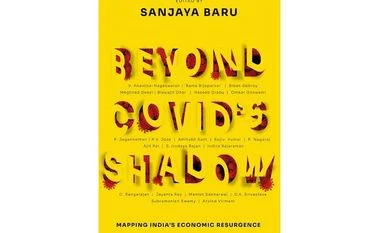
Book cover
Book cover of Beyond Covid’s Shadow — Mapping India’s Economic Resurgence
A K Bhattacharya New Delhi
5 min read Last Updated : Feb 11 2021 | 11:24 PM IST
There are 20 essays in this book, all focused on evaluating the impact of Covid-19 and the lockdown on the economy, the government’s policy response and the way forward. The essays are segmented under six broad subject categories — managing growth, the fiscal dimension, the pandemic’s impact on the people, trade policy, employment, including migration, and the new economy.

The editor of the volume has chosen the contributors with care and prudence. About a fifth of them are associated with the current government or its advisory bodies and four more are sympathetic to the Modi regime. One of the essays is from an advisor to the Manmohan Singh government and two other essayists are strong critics of the Narendra Modi government, irrespective of their current political affiliations or ideology. The remaining essayists are all well-known analysts and commentators.

Reading Rajiv Kumar, vice-chairman of NITI Aayog, and Ajit Pai, who is a consultant with the government’s think tank, you would be amused to learn that the Indian economy in early 2020 was on the verge of a pick-up, led by policy reforms, but Covid-19 ravaged the economy and destroyed that trajectory. A different perspective emerges from Chakravarthi Rangarajan and D K Srivastava, who argue that the Indian economy was already on a decelerating growth path before it was hobbled by the pandemic. Their assessment of the growth trajectory before the pandemic may be different, but they broadly agree on the need for rapid economic reforms and investment in infrastructure to pave the way for sustainable growth in the coming years.

Bibek Debroy, who is the chairman of the Prime Minister’s Economic Advisory Council, exudes optimism over a sustained growth recovery, fuelled by reforms that were introduced before the Covid-19 outbreak.  You can ignore the essay by Amitabh Kant, CEO of NITI Aayog , without losing anything because he reiterates his complete endorsement of the government’s policy packages announced as part of its Atma Nirbhar Bharat initiative. There are no surprises here nor is there any novelty in what he says. Few essayists are as bullish as he has been about the prospects of India’s long-term economic recovery.

Arvind Virmani is also bullish, but he is more restrained in his overall approach, listing out a dozen policy initiatives that the government must adopt to restore economic growth. The highlight of Dr Virmani’s essay is his recommendation for selective protectionism. He suggests a proactive industrial policy to enhance India’s share in manufacturing, but he is of the view that a protectionist trade and tariff policy could be used only against a few countries. But for the rest of the world, let there be a free trade policy.

On trade policy, two other essays — one by Jayanta Roy, former economic advisor in the government, and the other by Biswajit Dhar, a trade economist —provide a rounded view on what the government needs to do to improve India’s exports. Dr Roy’s prescriptions are well-known; they once again urge the government to embrace multilateralism while warning against the policy on self-reliance turning into protectionism. 

Beyond Covid’s Shadow — Mapping India’s Economic Resurgence 
Editor: Sanjaya Baru
Publisher: Rupa Publications
Price: Rs 595
 
Dr Dhar argues that the nature of trade liberalisation policies need an overhaul. In his view, trade policy liberalisation will fail to achieve the desired goals without a medium-term strategy for reviving domestic manufacturing.

Lending a fresh perspective on trade-related issues, V Anantha Nageswaran, a member of the Prime Minister’s Economic Advisory Council, argues that resistance to rupee appreciation can weaken the economy in multiple ways. Instead, India’s competitiveness in manufacturing should be enhanced through a host of other reforms, including a review of policies that subsidise retail and agricultural consumption of electricity at the expense of industrial users and easing of norms to allow conversion of agricultural land for use by non-agricultural players. More than his suggestion for reforms, the idea of a strong rupee must be music to the  government’s ears. Subramanian Swamy has written a strong essay attacking the Modi government’s economic policies, which could only partially address the slide in the economy after Covid-19. He offers two suggestions: One, the government’s policies must use incentives instead of coercion and, two, the goal should be to make India a globally competitive economy with the help of assured access to the markets and the technological innovations of the US and Israel. Haseeb Drabu’s essay stands out for some radical recommendations for a greater role for states in the country’s regulatory structure and switching over to lateral federalism, moving away from the current system of vertical federalism.

Omkar Goswami is one of the few writers in this compendium of essays who is not an optimist. He believes that though reforms like privatisation are needed, the possibility of Covid-19 pushing the government to implement bold reforms is remote. Some of his assumptions on the Budget numbers and expectations on policy have been challenged by subsequent developments. Similarly, Indira Rajaraman’s essay citing Kerala’s management of Covid-19 as a success story gets overtaken by recent developments such as a spike in the number of infections in the state.

On the whole, the range of issues covered in this volume is impressive though it is by no means comprehensive. Agriculture and environment were significantly impacted by the pandemic and the value of this volume would have been enhanced if, instead of a preponderant focus on growth, a couple of essays had focused on the challenges facing these two sectors, which unquestionably play a critical role in India’s economic resurgence.

One subscription. Two world-class reads.

Already subscribed? Log in

Subscribe to read the full story →
*Subscribe to Business Standard digital and get complimentary access to The New York Times

Smart Quarterly

₹900

3 Months

₹300/Month

SAVE 25%

Smart Essential

₹2,700

1 Year

₹225/Month

SAVE 46%
*Complimentary New York Times access for the 2nd year will be given after 12 months

Super Saver

₹3,900

2 Years

₹162/Month

Subscribe

Renews automatically, cancel anytime

Here’s what’s included in our digital subscription plans

Exclusive premium stories online

  • Over 30 premium stories daily, handpicked by our editors

Complimentary Access to The New York Times

  • News, Games, Cooking, Audio, Wirecutter & The Athletic

Business Standard Epaper

  • Digital replica of our daily newspaper — with options to read, save, and share

Curated Newsletters

  • Insights on markets, finance, politics, tech, and more delivered to your inbox

Market Analysis & Investment Insights

  • In-depth market analysis & insights with access to The Smart Investor

Archives

  • Repository of articles and publications dating back to 1997

Ad-free Reading

  • Uninterrupted reading experience with no advertisements

Seamless Access Across All Devices

  • Access Business Standard across devices — mobile, tablet, or PC, via web or app

Topics :CoronavirusBOOK REVIEWIndian Economy

Next Story



