Film Review: Parched explores gender and sexuality through frank conversations
Leena Yadav's Parched captures the unquestioned acceptance of patriarchy through light-hearted conversations between women
Geetanjali Krishna In 2012, a film maker from Mumbai found herself in some of Kutch’s remotest villages. In the course of her travels, she struck friendships with many women. “Often, our conversations would turn into surprisingly frank discussions on gender and sexuality. I realised we all talk of sex in the city — little knowing that it’s alive and well in our villages too!” says Leena Yadav (known for her earlier directorial ventures Shabd and Teen Patti). “In retrospect, I realised how universal these stories were! The world over, women sell their bodies to survive, survive in abusive relationships, or live in the shadow of past relationships.” Parched, written, directed and co-produced by Yadav, has emerged from these conversations. It’s making news not only as Bollywood actor Ajay Devgn’s debut in an international production venture, but also because it has premiered under the Special Presentation category at the prestigious 2015 Toronto International Film Festival (TIFF), which will culminate on September 20.
Parched is a multi-layered story, sensitively told. In a remote desert village, there are three women — a young widow Rani (played by Tannishtha Chatterjee); her vivacious best friend, Lajjo (Radhika Apte), who is trying unsuccessfully to have a baby with her abusive husband; and the erotic dancer Bijli (Surveen Chawla). Their unquestioning acceptance of patriarchy wavers when Rani has to find a bride for her 15-year-old son. This prompts the trio to question a world in which their sexuality is both despised and coveted. They realise that they too are as parched as the arid desert they inhabit, thirsting for more than what life has given them. Yet, the film doesn’t just explore the oppressed (and repressed) lives of its protagonists. Yadav says, “For me, the loveliest parts of the movie are the light-hearted interactions between Rani, Lajjo and Bijli. Parched celebrates the small joys that even the most oppressed women enjoy in female company.”
Filming Parched, says Yadav, has been a transformational experience. “While shooting, we conducted several workshops with the crew to discuss gender, sexuality and moral judgement. It felt so liberating to discuss it all openly.” she recounts. “In fact, I’d love for my audiences to have similar discussions around the issues the film raises,” Chatterjee, who essays the role of Rani the widow in the film, travelled with Yadav through Kutch before she wrote the script. “Village women weren’t half as shy with other women, as they appeared underneath their veils!” she says. “Our conversations were so revealing.”
From the outset, Parched was visualised as a film for international audiences. With an eye at international markets, Yadav and husband Aseem Bajaj (one of the film’s co-producers) carefully worked on the look of the film. While scouting for locales, they came across an abandoned nomadic village in Rajasthan. “It allowed us to recreate the traditional mud architecture now slowly being replaced by cement houses,” says Yadav. For the same reason, they decided to depict the desert landscape through the wandering, wondering eyes of a traveler, rather than a local who might take it for granted. It was quite a coup when Hollywood cinematographer Russel Carpenter (winner of the best cinematography Oscar for his work on Titanic) read the screenplay and immediately agreed to work on the film. Carpenter says that working on Parched was one of the most gratifying experiences of his creative life. “We all knew we were telling an important story that needed to be told,” he says.
Financing this venture has proved to be quite a task, as Yadav and Bajaj were, from the outset, on the lookout for private funding. “Devgn gave us the seed money and invaluable support,” says Yadav. A couple of other funders came forward to help the duo complete the film. At its premiere in Toronto, Parched has received interesting reviews. Cameron Bailey, Canadian film critic and artistic director of TIFF 2015, has written: “Splendidly shot by Academy Award-winning cinematographer Carpenter, Parched gradually accrues a feeling of grandeur — mirroring the way in which Yadav elevates these women’s stories, transforming her characters’ struggles into a stirring portrayal of liberation.” Some have hailed it as the coming of age of Indian cinema. As Chatterjee puts it, “The beauty of Parched is that it depicts women as they actually are. It has pushed against the narrow boundaries that define the Indian woman — and the best thing is that our audiences are becoming mature enough to appreciate this.”

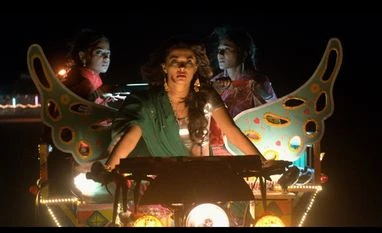 "<b>Film Review:</b> Parched explores gender and sexuality through frank conversations")


 Connect with us on WhatsApp