As Raigad approaches on the Mumbai-Goa highway, the air becomes a few degrees cooler. The forest cover grows dense and a few shades greener. The flow of traffic slows in hamlets around Pen and Khopoli. Otherwise known for small-scale units that make Ganpati idols, these towns have in recent times become synonymous with deaths that belong to a godless world.
Home to deep jungles of teak and evergreen trees as well as villages with a sprinkling of houses, Raigad's rural areas are thinly populated. The district is also just about two hours away from Mumbai. While these attributes have made it a popular destination for weekend villas, they have also allowed it to be viewed as a convenient location to dispose of bodies. As many as 763 unclaimed bodies were found in the region between 2012 and 2015, according to reports. Remains are usually spotted in gorges and inner forests.
The most recent and infamous of these cases is that of Sheena Bora, who was allegedly killed by her mother Indrani Mukerjea. Remains of her body, the Mumbai Police have claimed, were found in the thickets of Gagode Khurd village, where it was dumped in 2012.
That spot has become a local landmark, with rickshaw drivers even stopping uninvited to offer directions. White-and-red tape advocating "caution" is still draped on bushes where wildflowers of the same colours have sprung up. The dug-up site of the crime is a marshy ditch roughly three feet deep.
The heavily-discussed investigation of this murder prompted some locals in the region to bring up similar cases from as far back as the mid-1980s. Vaishali Patil, an activist who has worked in Raigad for 25 years, highlights past deaths at the neighbouring Gagode Budruk village. At least three people were found murdered in 1986 and three more in 1992, says Vaishali.
These deaths, of which only one was of a local, all happened around a large farmhouse owned by a Bollywood actor. The farmhouse, surrounded by big tracts of coconut trees, appears rather stodgy on the outside. While activist Patil says locals talked of glamourous parties being thrown there, the structure looks more like an investment than a trophy.
Villagers remember the murder but are foggy about the details. Over the years, the under-probed cases had been almost forgotten. The actor concerned could not be contacted for this report.
The home of Moru Patil, a night watchman at the farmhouse, who was among the three people found dead there in 1992, has had more visitors than ever before in the last few days. Streams of journalists have walked in wielding questions, often in Hindi, say the Patils.
Vanita, the slain man's daughter-in-law, says the family was given Rs 10,000 at the time and has not heard from the actor or the police since then. Moru looked to have suffered four blows to the stomach, while the others, a couple from out of town who worked as gardeners, had stab wounds, she says. The attackers and their motive remain unknown. Amid smearing the courtyard of her home with cowdung, Vanita adds she has no hope for resolution after all these years.
Several villagers share her views but are reluctant to reveal their names or pose for photographs, meeting such requests with a firm "No". A mix of fear and frustration hangs in the air. There is no reward for reporting deaths, according to them. "There are only hassles. Panchnamas and investigations mean losing a day's wages each time, so even if one hears of anything, nothing is done about it," says one local. A few choose instead to inform activists like Patil who in turn alert the police.
At the police station in Pen, officers seem to have been instructed to direct all queries to the Raigad police headquarters. But about the fear among locals while dealing with such incidents, one cop observes in Marathi, "People bring cases to our notice but request not to be named. They want to avoid being a part of official inquiries." This, the officer says, makes it harder to build and solve a case. A spokesperson for Raigad police said a special officer had been appointed and the cases were being investigated again.
Some residents of Gagode Budruk consider the issue a matter of humiliation. The village is the birthplace of Vinoba Bhave, a follower of Mahatma Gandhi and the founder of the Bhoodan Movement. "He spent his life promoting the principles of non-violence. It is sad that grim crimes are being associated with the village of a great man like him," rues a shop-owner.
Vijay Diwan, activist and caretaker of the Vinoba Bhave Janmasthan Ashram, has maintained a written entry about the deaths in the farmhouse in 1992.
The renewed interest in mysterious deaths in the region is an opportunity to ask for stronger policing, says Vaishali Patil. Even if earlier cases remain unresolved, Diwan believes there is a need to look for solutions to avert future cover-ups. While it is mandatory in cities for relatives to produce a portion of the death certificate on the cremation ground, the rule does not apply in rural areas, he notes. This makes it easier to cover up deaths because of dowry violence or family disputes. "Enforcing stricter rules for final rites in villages will send out a strong message to criminals."

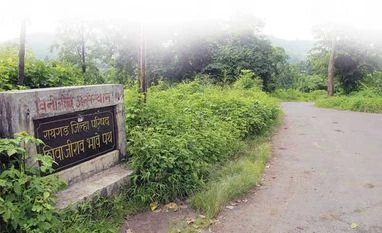 "Raigad, the dumping ground for dead bodies")


 Connect with us on WhatsApp