India's secondary sex

What kind of society are we that we consistently, deliberately - and systematically - fail our women?
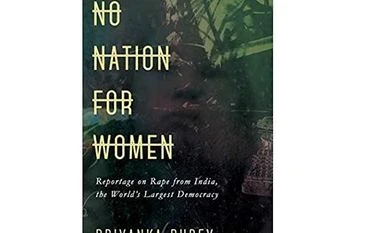
no nation for women
Veenu Sandhu
Last Updated : Feb 20 2019 | 1:22 AM IST
Doctors at the trauma centre of the All India Institute of Medical Sciences in Delhi are used to handling horrible cases. But even they were shaken by this one. A 15-year-old girl — a child herself — had brought in a two-year-old for treatment claiming to be her mother. The unnamed toddler had a fractured skull and human bite marks all over her body. The doctors, who named her Falak, which means “sky” or “heaven”, said they had never seen a child in such a terrible state. The little girl died after nearly two months in hospital, and after having suffered lung, blood and brain infections and three heart attacks. This was seven years ago, around this time of the year.

Priyanka Dubey’s book, No Nation for Women: Reportage on Rape from India, the World’s Largest Democracy, took me back to Falak’s story. The child’s distressing condition and subsequent death had exposed the ghastly underbelly of Indian society. Linked to her story was the story of rampant sexual abuse that women in India face at different levels and in different ways — prostitution, rape, bride selling and human trafficking, all of which had collectively led to her death. And yet, so familiar is this story that it doesn’t send a chill down our spines anymore.

Something similar happens as you read one horrible case after the other in Ms Dubey’s book. Over the chapters, though the names of the women change as does their situation, everything becomes one big blur where stories seem to overlap, where one woman’s experience appears to slip into another’s. And that’s when the intensity, acceptability and monstrous expression of the pervasive prejudices against women in India truly hits you.

No Nation for Women is a solid work of reporting done over six years across geographies. Ms Dubey begins with Bundelkhand, a region divided between Uttar Pradesh and Madhya Pradesh, which she calls “no woman’s land”. You soon find out why. The victims, some as young as 14, are girls who had dared to spurn the advances of men. So, they were punished with “corrective” rape. Many were burnt to death after the sexual assault. Theirs were stories that seldom travelled out of their impoverished, back-of-the-beyond land.

The next chapter finds Ms Dubey in Tripura, the country’s northeastern tip bordering Bangladesh, where rape assumes a political overtone — where it becomes a tool for taking revenge, teaching a lesson and showing a woman her place. One of the victims here is a 50-year-old political worker with three adult children who thought she was past the age where she needed to worry about being sexually assaulted. Once a carefree, empowered person, she now keeps turning back to see if someone is following her as she walks through the village. Stories such as these, too, seldom make it to national newspapers, given how the Northeast often falls on our blind spot. “You’re from Delhi, aren’t you?” a human rights activist asks the author, “… We don’t exist for you.”

Over 13 chapters, No Nation… brings out the disturbing extent of the crime. Each chapter carries multiple stories of women, some dead, many still fighting the long fight for justice.

In the chapter on trafficking that brings the story of four tribal girls — three from Madhya Pradesh and one from Assam — you get graphic accounts of how a skewed sex ratio in one state is destroying the lives and families of girls in another. And how some maid placement agencies, to which we turn so that our homes can function like clockwork, are serving as a cog in the sinister system that traffics girls.

Ms Dubey also touches upon the three layers of the trafficking industry: The confidante who lures the girls, the middleman who facilitates their transit to another city and the agent in the “delivery city” who does the final buying and selling. The buyer sometimes is a desperate bride-seeker, a pimp or a maid placement agency.

Rapes in police custody, in small towns, of children, to establish caste supremacy — in the end, you are left staring at the pages, numb. What kind of society are we that we consistently, deliberately — and systematically — fail our women?

Throughout, the biases leap out of the pages: In the way a 13-year-old boy smirks when the author asks for directions to a gang-rape victim’s house; in the attitude of a policeman who is convinced that a woman constable who is raped while she is ferrying her sister’s body to her village for cremation has a “loose” character; in the manner in which the policemen tell Ms Dubey that women should be banned from joining the force because they are only a distraction.

A sound piece of reportage, No Nation…could, however, have done with sharper editing. The issue of rehabilitating rape survivors in India is also under-addressed in the book — as it is in our society.

The author does not isolate herself from the stories she tells. She is honest about their impact on her, which makes No Nation… a sensitive, if disturbing, book. In one place, for instance, she says she wants to howl and scream loudly. “Instead I cover my face with my scarf and sob. Silently. Because I don’t want the driver to know that I am crying. Otherwise he might assume that I am a “weak woman”. And no good things happen to “weak” women in this world.”

The vulnerability of a woman — whether she lives in a remote village or is an empowered reporter —hits you.


No Nation for Women:
Reportage on Rape from India, the World’s Largest Democracy
Priyanka Dubey
Simon & Schuster
Pages: 242; Price: Rs 399

One subscription. Two world-class reads.

Already subscribed? Log in

Subscribe to read the full story →
*Subscribe to Business Standard digital and get complimentary access to The New York Times

Smart Quarterly

₹900

3 Months

₹300/Month

SAVE 25%

Smart Essential

₹2,700

1 Year

₹225/Month

SAVE 46%
*Complimentary New York Times access for the 2nd year will be given after 12 months

Super Saver

₹3,900

2 Years

₹162/Month

Subscribe

Renews automatically, cancel anytime

Here’s what’s included in our digital subscription plans

Exclusive premium stories online

  • Over 30 premium stories daily, handpicked by our editors

Complimentary Access to The New York Times

  • News, Games, Cooking, Audio, Wirecutter & The Athletic

Business Standard Epaper

  • Digital replica of our daily newspaper — with options to read, save, and share

Curated Newsletters

  • Insights on markets, finance, politics, tech, and more delivered to your inbox

Market Analysis & Investment Insights

  • In-depth market analysis & insights with access to The Smart Investor

Archives

  • Repository of articles and publications dating back to 1997

Ad-free Reading

  • Uninterrupted reading experience with no advertisements

Seamless Access Across All Devices

  • Access Business Standard across devices — mobile, tablet, or PC, via web or app

Next Story



