As the author painstakingly details — and that is one reason why this book is an elbow-taxing 725 pages long — Menon’s diplomatic achievements go well beyond his marathon, eight-hour-long speech in the United Nations, where, as even his detractors admit, he memorably defended India’s position on Kashmir. Menon also played a key role in mediating between the US and China on Korea, salvaging the Indo-China (Vietnam) accords in Geneva in 1954 and, incredibly, almost managing to bring together America and China in 1955 — something that Pakistan eventually pulled off in 1971.
Ironically, given that so many of these triumphs involved China, Menon’s Waterloo came with the Sino-Indian war of 1962. Ramesh details the euphoria that greeted Menon’s appointment as defence minister in 1957, and the widespread optimism about the benefits of Menon’s partnership with the highly regarded army chief, General K M Thimayya. But, while Menon established the Defence Research & Development Organisation, the Border Roads Organisation, launched the Navy onto a Blue Water trajectory with the purchase of an aircraft carrier, INS Vikrant, and began the building of fighter aircraft in the country by concluding the MiG-21 contract with the Soviet Union, his inability to get along with his senior commanders (like him, heavily anglicised) severely undermined the military’s organisational coherence. In one of the most shocking parts of the book, Ramesh cites diplomatic despatches that recount Indian generals and officials, including Thimayya and Vijaya Lakshmi Pandit, complaining bitterly about Menon to the British ambassador, even alleging that the defence minister was readying a coup to supplant Nehru. Today, this would seem disloyal, even treasonous but, in those days, not long after independence, the British continued to enjoy an exalted status that led to such confidences. It should not be forgotten that, until the late 1950s, the Indian Air Force and Navy continued to be commanded by British officers. Menon himself told the British envoy that “General Thimayya was a fool and not a very nice fool either”, and blamed a lot of the backbiting on “too much whisky in the American embassy”.

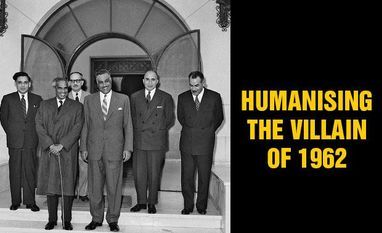 "Jairam Ramesh's book on VK Krishna Menon humanises the villain of 1962")









