Catastrophic events incubate their own revisionist histories. The partition of India — its attendant bloodbath, the portfolio of unresolved issues and legacy of mistrust and hostility — is a case in point. Earlier narratives were linear: The two-nation theory of the Muslim League led to the partition. In Pakistan this was intrinsic to its founding ideology — that Muslims had always sought a separate homeland and Qaid-i-Azam Muhammad Ali Jinnah was the leader who steered this aspiration to its destiny in the form of separate nationhood. The partition debate and the Jinnah debate were, and are, therefore, inseparable. Ayesha Jalal’s 1985 book, The Sole Spokesman, undermined to an extent this prevailing orthodoxy with its argument that Jinnah was not taking an ideological position with regard to the two-nation theory but was a tactician manoeuvring for position. Partition happened because the Congress did not do what politicians must do — negotiate and compromise. Jalal’s conclusion, thus, was: “It was Congress that insisted on partition. It was Jinnah who was against partition”. If many boggled at this, it is useful to remember that all revisionist accounts stretch themselves and the evidence, often unduly, to challenge prevailing orthodoxies.
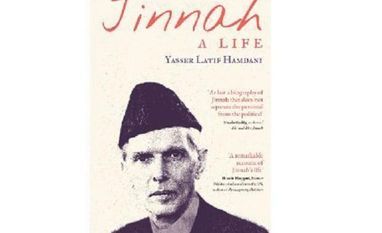
Yasser Latif Hamdani’s Jinnah: A Life is to be seen in this context. The author is a well-known lawyer and columnist in Pakistan who stands out for his enlightened and liberal views on many of the contested issues Pakistan confronts. Broadly, Hamdani’s treatment has three themes. First, resurrecting the forgotten Jinnah who was, in the first two decades of the 20th century, a protagonist of Hindu-Muslim unity and a committed Congressman. The high point was the 1916 Lucknow Pact between the Congress and the Muslim League — in a sense, Jinnah’s personal achievement. This was in Hamdani’s words an “extraordinary victory” for Jinnah and “the highest point in his political career and the point where he probably and legitimately thought of himself as leading India to self government”.
This is, however, a more deeply contested terrain than Hamdani concedes, with multiple accounts, since what is being debated is the responsibility for the bloodbath accompanying partition for which no one wanted to take the blame .
These first two themes in the book involve in large part an engagement with the Indian view— but one also widely shared elsewhere — of Jinnah having destroyed subcontinental and communal unity. There is, however, a third theme that pits Jinnah against the many issues that bedevil Pakistan — the obsession with the Ahmedias, the long failure of constitutionalism, the narrow religious orthodoxy that dominates policy-making, the dire situation of non- Muslims, the role of the military in politics and governance and others. In Hamdani’s account, Jinnah’s journey to disillusionment was quick and evident in the brief period that he lived after Pakistan’s creation. He is believed to have “frankly told his doctor that Pakistan had been the biggest blunder of his life and that he wanted to go to Delhi and tell Jawaharlal Nehru to be friends again”. In Hamdani’s view the biggest reversal for Jinnah’s vision has been Pakistan’s troubled relationship with India” and “that vision had suffered a backlash in his lifetime with the Kashmir conflict”.

 "Jinnah's tragedy")












 Connect with us on WhatsApp