5 min read Last Updated : May 28 2019 | 9:17 PM IST
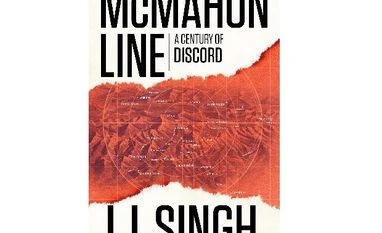
The McMahon Line: A Century of Discord
General J J Singh
HarperCollins; Rs 799, 464 pages
General J J Singh, a former Chief of Army Staff, has produced a useful and detailed backgrounder to the evolution of the McMahon Line as the boundary between India and China in the eastern sector. Much of the story he recounts in The McMahon Line: A Century of Discord is well known but it is convenient to have the historical material and documentation laid out in an organised and systematic manner. The author also touches upon the disputes in the western and middle sectors of the India-China border. These accounts are useful in understanding the historical and geographical aspects of the two countries’ competing territorial claims. There are no citations from new archival material, however, which may provide fresh insights, and this is a limitation.
The book has nine parts, with the first three focused on Tibet and its relationship with China on the one hand and the expanding power of the British Indian empire south of the Himalayas on the other. The British posture towards Tibet was framed in the context of the then Great Game, obsessed with the Tsarist Russia expanding its reach into Central Asia ever closer to the frontiers of the British Indian empire. A weakened China was seen not as a threat but a possible buffer between Russia and India. It is in this context that the fiction of Chinese suzerainty over Tibet was concocted even while supporting Tibetan autonomy. It is only when Chinese expanded into Eastern Tibet, into the so-called Marches, adjoining the tribal areas of the Indian north-east that the need was felt to establish a de jure boundary in this segment of the undefined frontier between Tibet and India. The McMahon line was the result but it was agreed by the British and Tibetan representatives at the tripartite conference convened in Shimla in 1914. It was rejected by the Chinese representative.
The book confirms that at the heart of the border issue between India and China has been and continues to be Tibet. A border dispute between the two countries became a strategic issue once the anti-Chinese revolt broke out in 1959 and the Dalai Lama was given refuge in India. India began to be seen as undermining China’s efforts to consolidate its rule over Tibet and the skirmishes along the border were seen through that prism by Chinese leaders.
Parts eight and nine attempt to decode Chinese foreign policy behaviour and emphasise the need for a better understanding of China, its history, culture and strategic thinking in managing the China challenge. This is unexceptionable and has been reiterated by several China scholars and diplomats. However, the book does not go beyond the familiar readings of Chinese behaviour — that it is infused with long-term perspective, that it relies on deception and obfuscation and that in unfavourable situations it will attempt to spin things out and procrastinate, waiting for a more favourable turn of events. We know this but how does one counter it?
The final part of the book details the recent history of border negotiations between India and China but there are no new and practical recommendations on the way forward. The clarification of the Line of Actual Control (LAC) has been strongly emphasised but the Chinese so far have been reluctant to engage. Without this, making adjustments in areas of differing perceptions, which the author suggests, would be impossible. The “package proposal” which would have seen the Chinese side accept the alignment of the McMahon Line in the east for India’s acquiescence to Chinese occupation of Aksai Chin in the west, too, is no longer on offer. In 1986, the Chinese side re-interpreted the “package” to insist that India must make meaningful concessions in the eastern sector, including the cession of Tawang, in return for which China would make some unspecified concessions in the west. Given this situation, it is unlikely that there could be an early resolution of the border issue. However, it is also true that the longer the status quo on the border persists the more legitimacy the present alignment acquires. For India, therefore, the challenge lies in deploying enough forces and asymmetrical capabilities to render any attempt by China to alter the status quo through major incursions, both costly and risky. With his immense experience in military matters, General Singh could have given us a well-considered military perspective on this score.
General Singh has a concluding chapter on the way forward, which provides an essentially positive perspective on India-China relations, stressing convergences rather than differences. He believes that “we may be competitors but not rivals” but is not rivalry inherent in competition? It may be more appropriate to describe India-China relations as between adversaries, not enemies.
General Singh is to be complimented for the considerable research and reading that he has obviously undertaken to bring to us a useful and comprehensive reference book on the India-China border. I would hope he will now give us his assessment, as a military strategist, of the military situation on the India-China border, the logistical challenges we face due to inhospitable terrain and the growing asymmetry in the capabilities deployed by the two sides on a contested border. This is what will eventually impact the nature of relations between the two Asian powers.
(The reviewer is a former Foreign Secretary and is currently Senior Fellow, CPR)