One nation, one man

When we look around us, there is no change in the India of today over the India of 2014
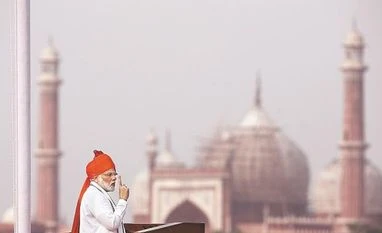
Narendra Modi
Aakar Patel
5 min read Last Updated : Dec 04 2019 | 8:04 PM IST
All through that phenomenal campaign of 2014, there was a claim and an acceptance of it that I found unsettling. The claim was that an individual could change India, because what was missing from our polity and our culture was the honesty and dedication and genius of one right-minded person.

The introduction of this individual would lead to dramatic change, just as it had elsewhere (in this case Gujarat). Now being Gujarati, and having experienced that state and its people first hand for nearly five decades, I was unable to swallow the claim. Gujarat is a very complex entity that has done what it has done for at least six centuries, through evolution. To say that it was in some major way transformed in the dozen or so years between 2001 and 2014 is untrue.

Also, it is unfair to an individual to be burdened with such responsibilities. The destiny of 1.2 billion people can never be in the hand of one man. To have a messianic belief that this is, in fact, possible is delusional.

I could go on about this but why look at the theory when there is evidence of this? When we look around us, there is no change in the India of today over the India of 2014. There is certainly no change that would not have in any case happened, whether or not a particular individual, whoever he or she may be, presided over the Union Cabinet.

We have a really mature political system. There is a layered bureaucracy that has been in place for over a century and been doing the same thing. There is the police and judicial system that has been functioning under laws that were written 150 years ago. There is a form of representative government that has developed and ripened over seven decades. There is a social structure that has lasted millennia with all of its horrors and shortcomings. There is an economy that for many years now has had strong linkages with the external world and is susceptible to it (as we are seeing in the instance of the constant hikes in the price of petrol).

This is a system that has lasted and functioned and stood the test of time. It has evolved to what it is today through encountering severe forces. India is not a simple piece of machinery that can be reorganised by a man so that it runs totally differently. 

It is possible here to argue that an individual can make it more efficient in some way, but that is not the claim that was made. The claim was transformation. This is not possible. 

I am not making the case that an individual and the effort put in by her or him does not matter. One need only look at the lives of the Buddha, Aristotle, Newton, Muhammad, Einstein and Jesus to know that it would be foolhardy to dismiss what one individual can do. The lives of these individuals and their work did, over the centuries, help transform billions of lives.

But that is possible in the realm of religion and science. It is not really possible in the realm of politics unless one wants to discard the rules. For example, it is absolutely true that Germany in the 1930s and the first half of the 1940s was transformed under an individual. But it was an awful transformation that gave voice to the worst prejudices of a people.

I have not included Gandhi in this list, though many others would, on the assumption that Gandhi delivered us freedom from colonial Britain. That would be a gross simplification of history. No scholar or scientist would argue that without Gandhi India would not have got freedom around the same time as it did. World War II and the awful beating the United Kingdom took in it was much more responsible for freedom than Gandhi. Roosevelt and his Atlantic Charter, forcing Churchill to give up colonialism, was more responsible or at least as responsible as the Congress party. The very movement of time and of history and modern thinking made it untenable that within Britain there should exist for too long a large section of the population that would want to remain a race of colonisers.

There are limits to the change an individual can effect given the actions of such fundamental forces. Individuals in power can singlehandedly produce devastation, pushing their population in the wrong direction. It is the pulling of all of them, with their consent, up into a manifestly different reality that is difficult in small communities and impossible in giant ones like India.

Even things that were seen as easy to do because of an absence of resolve is now clear were not easy as was promised. India’s institutional response to Pakistan (and Pakistan’s to India) has been sifted through by many leaders and many parliaments. To assume that we have now changed that substantially through one stroke — “surgical strike” — is to believe in fairies. The problems remain because they are complex. Individuals can simplify them in their campaign narrative to electorates; actually solving them is not as easy.

I have articulated here what I have always felt. I did not think that great change was possible and I was astonished at the numbers that bought into that promise. I think that many people will have had a sobering experience over the last four-and-a-half years. 

It is one reason that in the election of 2019, that claim about individual genius and transformation will not be made, and will certainly not be made with the same certitude as it was in 2014.

One subscription. Two world-class reads.

Already subscribed? Log in

Subscribe to read the full story →
*Subscribe to Business Standard digital and get complimentary access to The New York Times

Smart Quarterly

₹900

3 Months

₹300/Month

SAVE 25%

Smart Essential

₹2,700

1 Year

₹225/Month

SAVE 46%
*Complimentary New York Times access for the 2nd year will be given after 12 months

Super Saver

₹3,900

2 Years

₹162/Month

Subscribe

Renews automatically, cancel anytime

Here’s what’s included in our digital subscription plans

Exclusive premium stories online

  • Over 30 premium stories daily, handpicked by our editors

Complimentary Access to The New York Times

  • News, Games, Cooking, Audio, Wirecutter & The Athletic

Business Standard Epaper

  • Digital replica of our daily newspaper — with options to read, save, and share

Curated Newsletters

  • Insights on markets, finance, politics, tech, and more delivered to your inbox

Market Analysis & Investment Insights

  • In-depth market analysis & insights with access to The Smart Investor

Archives

  • Repository of articles and publications dating back to 1997

Ad-free Reading

  • Uninterrupted reading experience with no advertisements

Seamless Access Across All Devices

  • Access Business Standard across devices — mobile, tablet, or PC, via web or app

Topics :Narendra Modi

Next Story



