
Power, upfront and personal
It is hard to summarise the riches in the book and the layers of insight into India's society, economy and politics
 "Power, upfront and personal")
premium
WebinarsNew
Deep DiveNew
Explore Business Standard
It is hard to summarise the riches in the book and the layers of insight into India's society, economy and politics
Those of us who were old enough to be able to read newspapers in the 1970s and 1980s are lucky. It was an era in Indian journalism that was unique: Vigorous, strong, unwavering, and lustily celebrating liberal democracy. At a time when India was Indira and Indira was India, almost all journalists saw themselves as urban Naxals: Hell, they revelled in the description. The leader of the pack was Arun Shourie, who steered The Indian Express over two stints in various capacities.
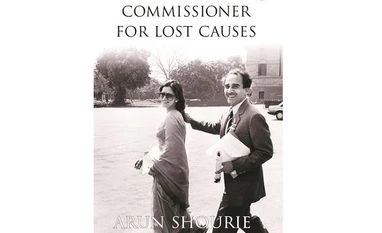
This book is about those years. It is about journalism and Mr Shourie’s place in it. It is about the complicated relationship between an editor and the proprietor of a newspaper. It is about fault-lines in the government and the opposition, the executive and the judiciary, and about the reporter’s relationship with politicians. But most of all it is about power — what people do to get it; having got it, how they hold on to it; and the stories of those who have been victims of the powerful.
Mr Shourie’s persona — then as now — is that of a mild-mannered, slightly distracted, donnish, lapsed economist. As The Hindustan Times editor Khushwant Singh once described him, he had “a very newly-washed clean look. . . like many Brahmins”. Nothing could be more deceptive. Mr Shourie comes across as a gritty, stubborn and, it has to be said, slightly self-righteous, individual in pursuit of The Truth and Justice. Heavvyy, you might say, but it is amply mitigated by his puckish, wicked sense of humour that evokes many chuckles as the book progresses.
The title of the book comes from Ram Nath Goenka (RNG), proprietor of The Indian Express, unafraid businessman, serial litigant, tough negotiator and, in some ways, Mr Shourie’s mentor. Mr Shourie’s friendship with RNG originates from that phase when both were fighting, in their individual capacities, Mrs Gandhi’s Emergency. Though Mr Shourie does not explicitly say so, RNG appears to regard him as this boyish pupil who needs to be shown The Way. Always a bit malicious, RNG bestowed the commissioner description on Mr Shourie when under his stewardship, The Indian Express ran a series for months on the state of Indian prisons and prisoners. The paper had broken the story of jail blindings in Bhagalpur — when police officials used needles (used to sew gunny bags) to drive them through the eyeballs of undertrials, following it by pouring acid to cauterise and basically fry the eyeballs so that vision was permanently lost. This was meant to warn criminals in Bihar of the fate that awaited them if they didn’t behave. Mr Shourie writes that these exposures did not end atrocities in jail. Nor, he says, did unveiling corruption or lies of governments or perfidy in the courts, end any of it. And in that sense, they were indeed lost causes. But recounting the incidents tells us — and those who rule us — the perils of the ease with which you can tell a lie and start believing it is the truth.
The Indian Express also exposed Maharashtra Chief Minister A R Antulay’s diabolically clever get-rich-quick scheme of creating “trusts” to promote “pratibha” (talent) in Indira Gandhi’s name. The funding for these trusts came from industry. The sugar mill levy was graded on the basis of how much the mills had contributed to the trusts; ditto distilleries who knew their licences could be given to new entrants if they didn’t pay up. All this was done with the full consent and knowledge of Prime Minister Indira Gandhi. But in Parliament, when the series caused an uproar, then Finance Minister R Venkatraman had no option but to say Antulay had collected the money without the PM’s consent. When Revenue Minister Shalinitai Patil said she had been forced to collect money for the trusts, she was sacked. Finally, Antulay had to go and Gandhi’s image took a severe beating — all because of a few column inches of newsprint.
There were scores of other such “lost causes” that Mr Shourie pursued and has collated — the Kuo oil deal and the Bofors papers among others. But equally entertaining are his accounts of politicians — such as the cunning Devi Lal and the seemingly rustic Zail Singh. A by-election in Meham where Devi Lal’s son, O P Chautala was contesting had seen a lot of violence and intimidation. “Our reporters filed accounts of the fraudulent way in which Chautala had won. I wrote an editorial or two arguing that the result should be annulled. ‘Throw him out,’ our editorial of 1 March counselled,” Mr Shourie writes. Devi Lal called. It was not a parliamentary conversation; abusive language involving mothers and sisters was tossed casually by India’s deputy prime minister. Mr Shourie let Devi Lal know he couldn’t care less and shouted back. He was lucky. RNG backed him. And the intimidation stopped.
It is hard to summarise the riches in the book and the layers of insight into India’s society, economy and politics. In the book, Mr Shourie stops at his transition from a journalist into a full-time politician and then a minister in the
Atal Bihari Vajpayee government. But he warns more is coming. We can’t wait.
Already subscribed? Log in
Subscribe to read the full story →

3 Months
₹300/Month
1 Year
₹225/Month
2 Years
₹162/Month
Renews automatically, cancel anytime

Premium stories handpicked daily by our editors


News, Games, Cooking, Audio, Wirecutter & The Athletic
Digital replica of our daily newspaper — with options to read, save, and share


Insights on markets, finance, politics, tech, and more delivered to your inbox
In-depth market analysis & insights with access to The Smart Investor


Repository of articles and publications dating back to 1997
Uninterrupted reading experience with no advertisements


Access Business Standard across devices — mobile, tablet, or PC, via web or app
First Published: Mar 29 2022 | 10:51 PM IST


 Connect with us on WhatsApp