It was May 1967 when I first met Begum Akhtar. One day, my husband, Keshav, who worked with the Sangeet Natak Akademi, informed me excitedly about an official meeting with her at Hotel Airline close to the New Delhi Railway Station. I decided to go along, having grown up on her records. A few minutes into the meeting she asked me if I could sing. Coincidentally at that time I had ended my training with Mallika-e-thumri Siddheshwari Devi and had decided that I didn't want to sing anymore. So I told her that I didn't sing, I cooked. She grinned, "That's fine… Only those who can cook can sing well." My interests at that time lay more in classical music and not so much in
ghazal gayaki. All the while I was burning with curiosity that having learnt
thumri and
dadra, why didn't she practise the classical forms anymore? I couldn't help but ask. "When people are happy listening to
ghazals then why should I waste my time singing
thumri ?" she replied. But she did confess that at every
mehfil, most requests came for her popular
dadra,'Chha rahi kaali ghata, jiya mora lehraye re'. Suddenly she stopped, saying that she couldn't recall the antara or the latter half of the composition. Since I knew the composition, I quickly blurted out the antara, not knowing then that I was walking into a trap. "I have forgotten the tune also. After all I had sung the song when I was 14," she said. So again, like a fool I completed the tune. I could feel her gaze on me. She had caught my lie.
"Mashallah you sing so well. You have exactly the voice quality that is required for the repertoire that I sing," she said.
That was my first meeting with Begum Akhtar or Ammi as I called her. I didn't know at that time that she had only been pretending to not know me. She had once seen me accompanying Siddheshwari Devi in Lucknow and had wanted me as a
shagirda (disciple) even then. She had that quality that if she wanted something she would not rest till she acquired it.
I will never forget what followed after the meeting. She came down to Delhi from Lucknow a month later for a programme to commemorate Ghalib. She had already told Keshav that she would perform only on the condition that I accompanied her. When I met her backstage I made all sorts of excuses to weasel my way out of it. Finally only when she was on the verge of leaving in a huff did I fall at her feet and acquiesce. Throughout the performance she kept hinting for me to start singing but I tried to avoid all eye contact with her. So she tried another route. President Zakir Hussain was also in attendance at the concert. So she told him, "Hussain sahab, I am going to present my
dukhtaar (daughter) for the first time and I am sure you would like to listen to her." But her demeanour transformed when she turned to me, "You will dare to sing with me! Even your guru Siddheshwari Devi wouldn't dare to sit behind me and sing." I was livid and thought of teaching her a lesson by ruining her show. Every time she sang a note, I would raise the pitch a little, but such was her brilliance that she would immediately catch on. The audiences meanwhile were absolutely enjoying the musical gymnastics.
After the performance, Hussain
sahab came backstage and told her, "She is your very image." But I wasn't done with my anger. Till date I can't forgive myself for the way I spoke to her that day. "Have you even learnt from anyone? If you had, you wouldn't have insulted someone else's
ustad like that," I said. She smiled, "Siddheshwari Devi is so lucky that you dared to compete with me just to save the honour of your ustad. I can't even imagine to what extent you will go for me if you became my
shagirda," she said.
* * *
I spent the next nine years with her, during which she tried to enhance all that was good in me. She would always say, don't become my shadow, bring out your own individuality as a musician. We shared a sweet and sour relationship. She was a fabulous and yet a lonely person. She would become melancholic after every programme and cry copiously. Every night I would soothe her by massaging her head and narrating stories. There have been a lot of misconceptions about her, that she was a
tawaif. She wasn't. She hailed from an illustrious Sayyed family and her mother was the legally wedded wife of Justice Asghar Hussain. Ammi was his legitimate child. It's not that being a
tawaif was a bad thing as it was a community of singers and performers, and not prostitutes as commonly believed today. I found a lot about this while doing research on
Singing Women of India for the Ford Foundation. You needed to be from the Gandharva, Kinnar or Ramjani community to be a
tawaif which Ammi or her mother Mushtari weren't. It has become a norm of the times to dig out dirt about eminent personages, be it Gandhi, Tagore or Ammi. I simply don't like that.
Ammi struggled a lot. I found out more about her pain during an interview that she gave journalist Manmohan Talaq of
Milaap newspaper. As a teenager Akhtari Bai Faizabadi, as she was known then, had a great run on stage in Calcutta, with shows of
Nai Dulhan opening to packed theatres. But she suddenly disappeared from the theatre world. That interview was the first time she ever revealed why that happened. She was subjected to the lust of one of the
rajas of Bihar after one of her music
mehfils. She was whisked away to Lucknow by her mother where she gave birth to her daughter Shamima. To shield her from social prosecution her mother gave out that the new born was hers and not Akhtari's. That's how for years it was believed that Shamima was actually Ammi's sister. I can't even imagine the pain it must have caused her.
Also, all her life she missed a father figure in her life as Hussain left her mother when she was very young. Once she was performing at a walima (reception) in Lucknow when she came across her father. Later that night she kept thinking about how proudly he had been introducing his well-heeled children. Out of spite she bought a house right opposite his. All her life she had wanted to meet him, but the encounter left her disillusioned.
* * *
Ammi kaan ki bahut pakki thi. No one could say anything to her. She'd get upset. She took time to come around.
Ammi was deeply humane, a side which I saw a lot when I was expecting my first child. It was 1971 and Ammi woke up from a nightmare that I had died in childbirth. She got very worried and decided that the least she could do apart from praying was to preserve a sample of my voice. So in the advanced stage of pregnancy she took me to the recording studio and recorded a
ghazal of Amir Qazalbash, who was hailed as the Ghalib of that time. I nearly fainted but still managed to record. This happens to be the first record in which music was composed by Begum Akhtar. Immediately after the recording I was taken to Wellington where my son was born. In the night, visitors were not allowed, but she waltzed in, turning a deaf ear to everyone, throwing money at the nurses and the watchmen. Then she cradled my son in her lap and sang to him. The entire staff at Wellington came to listen. Again, contrary to popular media perception, her marriage with Nawab of Kakori, Ishtiaq Ahmed Abbasi, wasn't an unhappy one. It wasn't friendship that they shared. He was more like her guardian. A great scholar himself, he would explain poetry to her. Ammi had innate intelligence. She wasn't academically very qualified but was intellectually very bright. I was 25-30 years younger to her, but she had so much more energy. She would sing all evening, take a flight the next day to another city to perform at another programme. In the mornings her hotel room was crowded with admirers and others who wanted to curry favour with her. When she was in Delhi, food used to come for all from Kake da Dhaba. But she would eat only food cooked by me - with garlic and cumin
tadka and
khatte baingan. Once we were performing in Hyderabad to a packed hall. Invariably all requests would be routed through me as I was seated right behind her. Suddenly 10 to 12 chits came requesting the
shagirda to sing. Maybe people were curious about me. I hid the chits scared that if she found them I would lose my
shagirdi. She found the parchees and started laughing. She told the organisers to book the auditorium for the next day as well. The next day she sang so beautifully that the audiences were also weeping copiously. When she came to the third ghazal,
mere humnafaz mere humnawaa, she started coughing, the pitch went flat. She turned to me and urged me to sing. I was so touched. She had deliberately ruined her performance so that I could sing. I don't know how many disciples can boast of such deeds by their ustad.
It was in October 1974 that she breathed her last. Two years before this, Pandit Shambhu Maharaj, noted kathak exponent and one of my teachers, had died and his body had been displayed for the last
darshan. She had said, "Please don't display my body like this when I die." Every year I organise a programme in her memory under the aegis of the cultural organisation Kaladharmi. She herself had chosen the name.
"Kala is our god," she had said.

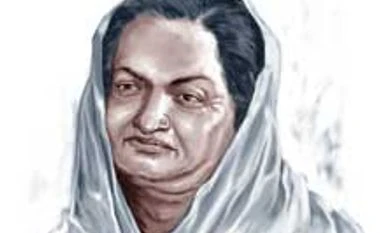 "Remembering Ammi")


 Connect with us on WhatsApp