Move to delink politics & fares in cold storage
The aim of an RTA is to rationalise rail fares and take fare fixation out of the ambit of political influence
BS Reporter New Delhi
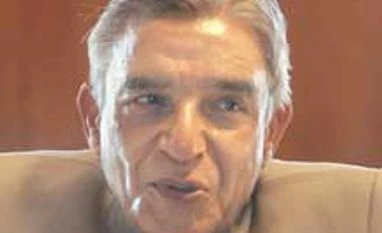
Railway Minister Pawan Kumar Bansal announced in his budget speech today that the proposal for the setting up of an independent Rail Tariff Authority (RTA) was at the inter-ministerial consultation stage.
The aim of an RTA is to rationalise rail fares and take fare fixation out of the ambit of political influence.
The formation of an RTA was proposed in the Rail Budget of 2012-13 by former railways minister, Dinesh Trivedi. Prime Minister Manmohan Singh had set a deadline of December 31, 2012, for the finalisation of the proposal for RTA by the inter-ministerial group.
In an earlier interview with Business Standard, Bansal had said, "In the larger interest, it is essential that we de-politicise the fare-fixing mechanism. Some fare hike is imperative to restore the physical and the financial health of the railways."
For many years, the railways did not increase fares in a bid to protect the interests of the common man; instead, the railways raised freight rates regularly to cover their mounting expenses. Therefore, while train fares in India are abnormally low, freight rates are among the highest in the world. As a result of this, rail freight traffic has moved to roads, which turned out to be more economical.
RTA is expected to remove the distortion in the inter-modal mix of transport besides bringing transparency to the rates fixation process. The proposal will require cabinet approval.
Trivedi had to quit after he hiked passenger fares from eight to 22 per cent and presented a reformist Budget in 2012. His replacement, Mukul Roy had then rolled back the increase in fares. The last across-the-board hike had happened at the start of the millennium, when Nitish Kumar held the charge of rail minister.
Earlier this year on January 9, Bansal increased fares across categories with an aim to earn Indian Railways incremental revenue of Rs 6,600 crore. Under the Railways Act, 1989, full powers for the fixation of tariff have been vested with the railway ministry. The act also gives power to zonal railway administrations to quote contractual lump sum rates outside the purview of class rates without reference to the central government.

 "Move to delink politics & fares in cold storage")


 Connect with us on WhatsApp