
1,600-MW Jharkhand project delayed amid Covid-19 lockdown: Adani Power
The project would supply 1,496 MW to Bangladesh Power Development Board after it is operational
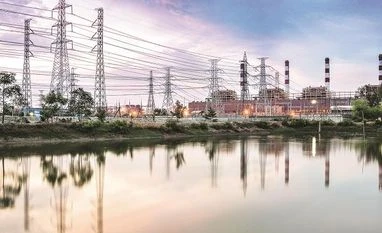 "1,600-MW Jharkhand project delayed amid Covid-19 lockdown: Adani Power")
premium
WebinarsNew
Deep DiveNew
Explore Business Standard
The project would supply 1,496 MW to Bangladesh Power Development Board after it is operational
Adani Power on Monday said its 1,600-megawatt (MW) thermal power project in Jharkhand has been delayed due to the coronavirus-induced lockdown.
The project would supply 1,496 MW to Bangladesh Power Development Board after it is operational.
"The COVID-19 has impacted and delayed the schedule of implementation and commissioning of 1,600-MW ultra supercritical coal-based thermal power project in the state of Jharkhand which is being developed for supply of 1,496 MW to the Bangladesh Power Development Board (BPDB) as per the power purchase agreement (PPA) executed," Adani Power said in a regulatory filing.
In March last year, the government had approved a Rs 14,000-crore special economic zone (SEZ) project of Adani Power in Jharkhand, which will export power to Bangladesh.
The project was approved by highest decision-making body on SEZ -- Board of Approval -- chaired by the commerce secretary, in its meeting on February 25, 2019.
Adani Power (Jharkhand) Ltd has sought approval for setting up of sector-specific SEZ for power at villages -- Motia, Mali, Gaighat and adjacent villages in Godda district, Jharkhand over an area of 425 hectare.
It had received formal approval for the land in possession of 222.68 hectare area and in-principle approval for remaining 202.32 hectare.
Two supercritical units of 800 MW each would be set up with an investment of Rs 14,000 crore which would include setting up of a water pipeline and power evacuation system.
It is scheduled to be ready by the end of 2022. The company had already signed power purchase agreement for supply of 100 per cent power generated from this plant to Bangladesh.
The SEZs are major export hubs in the country as the government provides several incentives including tax benefits and single window clearance system.
The developers and units of these zones enjoy certain fiscal and non-fiscal incentives such as no licence requirement for import, full freedom for subcontracting, and no routine examination by customs authorities of export/import cargo. They also enjoy direct and indirect tax benefits.
Already subscribed? Log in
Subscribe to read the full story →

3 Months
₹300/Month
1 Year
₹225/Month
2 Years
₹162/Month
Renews automatically, cancel anytime

Premium stories handpicked daily by our editors


News, Games, Cooking, Audio, Wirecutter & The Athletic
Digital replica of our daily newspaper — with options to read, save, and share


Insights on markets, finance, politics, tech, and more delivered to your inbox
In-depth market analysis & insights with access to The Smart Investor


Repository of articles and publications dating back to 1997
Uninterrupted reading experience with no advertisements


Access Business Standard across devices — mobile, tablet, or PC, via web or app
First Published: Jun 01 2020 | 11:19 PM IST


 Connect with us on WhatsApp