Amway India CEO taken into custody by AP's Khammam Police
Amway is facing nine criminal cases at various places in Andhra Pradesh
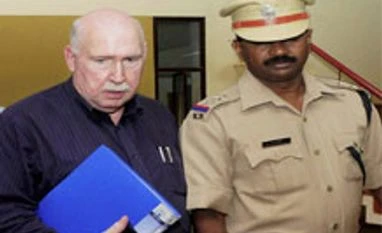
Press Trust of India Hyderabad Amway India CEO William Scott Pinckney was today arrested by Khammam Police in Andhra Pradesh in connection with a criminal case filed against the direct-selling company.
Amway is facing nine criminal cases at various places in Andhra Pradesh and Pinckney had already been arrested by Kurnool Police on Monday and lodged in a prison in Kadapa.
However, Khammam police yesterday took Pinckney into custody from the Kadapa jail after it obtained a production warrant from a court in Khammam against Pinckney, who was wanted in a case filed by Khammam I Town police following a complaint by one G Rama Rao.
"A police team produced Pinckney before a court this morning in Khammam after taking him into custody from Kadapa. He has been shown arrested by Khammam Police. The court sent him into judicial custody and the escort police party is in the process of shifting him to Central Prison in Warangal," a senior police official told PTI over phone.
A court in Kurnool district had yesterday rejected Pinckney's bail petition and granted his five-day remand to Kurnool police. Even before Kurnool Police could take his custody from Kadapa prison, the Khammam Police had taken him into custody.
Now, the Kurnool Police is likely to move a court seeking directions to the Warangal Jail authorities for his custody.
Responding to a complaint alleging financial irregularities in Amway's operations, Pinckney was arrested in Gurgaon on Monday by the Kurnool Police.
Amway faces criminal complaints in Guntur, Vijayawada, Prakasam, Khammam, Warangal and Medak. In addition, there are three cases in Hyderabad.
According to police, the CID had registered a criminal case against Amway in 2006. The company approached Andhra Pradesh High Court seeking a declaration that its marketing scheme does not fall under the provisions of 'The Prize Chits and Money Circulation Schemes (Banning) Act, 1978'.
But, the HC held that the scheme is an illegal 'Money Circulation Scheme' and falls within the definition of mischief, as described in the Act.

 "Amway India CEO taken into custody by AP's Khammam Police")


