Anti-dumping duty should not hurt power firms, says Fortum India MD

India recently initiated an investigation into dumping of solar panels from China, Malaysia, Taiwan
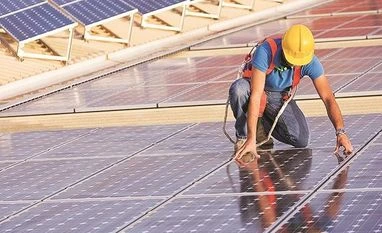
solar, renewable energy
Shreya Jai New Delhi
Last Updated : Aug 21 2017 | 3:08 AM IST
With the Indian government taking a strong stand against imports in the renewable sector, Finnish energy major Fortum believes that power developers should be protected against any impact.

“I am sure both the proponents of those who support anti-dumping duty (ADD) and those who don’t, would have good amount of ammunition to fight it out and there is regulatory mechanism to decide on that. Amidst all of this, the developer should not be put in an unfair position. There should be a grandfathering for the past bids that anti-dumping should not apply to them,” said Sanjay Aggarwal, managing director, Fortum India. 

India recently initiated an investigation into the dumping of solar panels coming from China, Malaysia and Taiwan — for the second time in the past three years. Fortum imports solar panels from Malaysia which, Aggarwal said, undergo strict quality tests.

“I can’t build in a duty now in my tariff. So, I don’t want to be unfairly targeted because of that. Clearly, it’s unfair that a developer needs to take a call on the ADD. There has to be a mechanism, by which the developer should be exempted. I would leave that to the authority but my project should not be impacted,” said Aggarwal.  

The government is also bringing in a quality policy to filter inferior quality imports in the power sector Aggarwal, however, said the policy should be for both imports and indigenous products. 

“DGAD (directorate of anti-dumping and allied duties) will decide how much reduction in tariff and its cascading effect helps the country vis-à-vis creation of this ADD. If we want to do 100 Gw, we have to add 20 Gw every year. We don’t have the manufacturing capacity to do that. Out of a capacity of 5 Gw, 1 Gw is cells, so the balance anyway comes from outside. Whether that Rs 1 tariff increase because of ADD creates ancillary, manpower and cascading effect versus how much advantage, if you were to start producing here, that is to be evaluated,” said Aggarwal.

Fortum has close to 225 Mw of solar projects in India and has distanced itself from free fall of tariff. Aggarwal said the company would put a bid only when it is financially viable.

“In a free market economy, it can’t be that all profits should go to the private sector and losses to the government. The pace of growth of solar in India seems to be driven by financial engineering around low bids and then technology follows, while it should be the opposite,” he said.

Emphasising that there is no focus on how the plant would be built in India, he said, falling tariffs have put such companies to the fore that design a project after the bid. “There is a need to put in an effort to construct a plant that would live for 25 years. People are randomly going for the cheapest quality to match their bids. A company with a utility DNA would always make sure that technical solution comes first and financial engineering comes later. The plant needs to be good before I do all fancy structures,” he said.

Fortum entered the Indian market in 2013 and is targeting an addition of 200 Mw energy every year in India. The company manages its South Asian affairs from India, making it the second-most important market after its home country. In 2016, it was the first company to take the solar bids below sub Rs 4.5 per unit for a 70 Mw project in Rajasthan. But it has slowed down participation in subsequent bidding rounds.

“Power market has changed and for the good. Disruption has come in but solar is here to stay. We are not clear on the pace, as the hiccups are already visible from this year,” said Aggarwal, citing the latest incidents of states backing out of renewable projects or renegotiating power-purchase agreements.

Fortum acquired two solar power plants in India but would focus on only green-field projects.

Aggarwal said the private equity investors that are backing the renewable companies putting ultra-low bids would exit once they get their returns. He believes that there would be another round of consolidation in the sector with the utility companies with strong financials surviving.

“These are warning pangs of the industry. There would be casualty. We have gone around looking for plants but none matched to our criteria,” he said.

One subscription. Two world-class reads.

Already subscribed? Log in

Subscribe to read the full story →
*Subscribe to Business Standard digital and get complimentary access to The New York Times

Smart Quarterly

₹900

3 Months

₹300/Month

SAVE 25%

Smart Essential

₹2,700

1 Year

₹225/Month

SAVE 46%
*Complimentary New York Times access for the 2nd year will be given after 12 months

Super Saver

₹3,900

2 Years

₹162/Month

Subscribe

Renews automatically, cancel anytime

Here’s what’s included in our digital subscription plans

Exclusive premium stories online

  • Over 30 premium stories daily, handpicked by our editors

Complimentary Access to The New York Times

  • News, Games, Cooking, Audio, Wirecutter & The Athletic

Business Standard Epaper

  • Digital replica of our daily newspaper — with options to read, save, and share

Curated Newsletters

  • Insights on markets, finance, politics, tech, and more delivered to your inbox

Market Analysis & Investment Insights

  • In-depth market analysis & insights with access to The Smart Investor

Archives

  • Repository of articles and publications dating back to 1997

Ad-free Reading

  • Uninterrupted reading experience with no advertisements

Seamless Access Across All Devices

  • Access Business Standard across devices — mobile, tablet, or PC, via web or app

Next Story


