Aurobindo’s acquisition of Apotex’s operations in five European countries, announced on Saturday, has not been taken well by the street, as the stock lost five per cent on Monday.
The concerns on a possible large-ticket acquisition, putting stress on the company’s balance sheet, also kept the street anxious. Analysts, however, said that while the buyout of Apotex’s operations in The Netherlands, Belgium, Spain, Poland and the Czech Republic makes business sense and has come at a reasonable price, it is unlikely to add to Aurobindo’s profits immediately. Moreover, it could weigh on its working capital, which is why the street reacted negatively.
First the positives: Apotex will drive forward Aurobindo’s prospects and enhance its product range and footprint in the continent, even as it may not be significantly big. The acquisition price at 0.56 times Apotex’s FY18 revenues (^74 million or Rs 5.92 billion), is also attractive.
On the flip side, the acquisition will not add to Aurobindo’s earnings in the initial years, at least till it turns around.
Apotex’s portfolio is expected to continue posting losses at the operating level (Ebitda loss at a run-rate of Rs 80 million per annum, based on analysts’ estimates) during FY19 and FY20.
Ranvir Singh at Systematix Shares thus estimates a 1-2 per cent negative impact on the earnings of Aurobindo in FY19 and FY20.
Further, analysts estimate the acquisition to lead to an increase in working capital, as operating profit may not be enough to cover costs. To execute sales of ^133 million, the company’s working capital requirement is seen rising to the tune of three months’ sales.
Aurobindo’s free cash flows, which have declined from Rs 15.84 billion in FY17 to Rs 5.58 billion (largely due to pricing pressure in the US), are seen further down at Rs 4.13 billion in FY19, according to Kotak Institutional Equities estimates. Net debt as on March 31 stood at Rs 35.07 billion.
Better execution, fast roll-out of its own products through acquired channels, and faster turnaround of Apotex business, will therefore be crucial moving forward. Aurobindo, to its credit, has already turned around acquisitions of Actavis (2014) and Genesis (2017) portfolio in Europe, by shifting product manufacturing to India and other measures. Similar efforts will be watched for, said analysts.

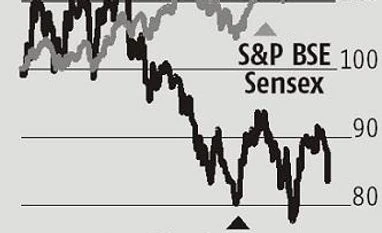 "Apotex buy may not initially contribute to Aurobindo's earnings")












 Connect with us on WhatsApp