Ashok Leyland's quality climb

How the commercial vehicle maker achieved a quality turnaround
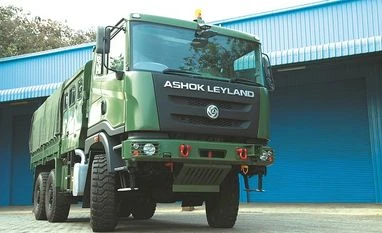
Ashok leyland
Ashok leyland
T E Narasimhan
Last Updated : Apr 24 2017 | 1:28 AM IST

Don't want to miss the best from Business Standard?

As commercial vehicle major Ashok Leyland eyes a position in the global top 10 in the trucks segment after occupying the fourth slot among bus manufacturers, its success on the quality front has helped fuel its ambitions. In November 2016, the company’s Pantnagar facility in Uttarakhand was recognised with a coveted global award for implementation of total quality management, which helped it to curb the defects per vehicle drastically in a span of five years.

“The Deming award is like the Nobel Prize. We are the first commercial vehicle manufacturer from outside Japan to have won the Deming Prize,” says Vinod K Dasari, managing director, Ashok Leyland.

Deming is the oldest and most recognised quality award in the world and is conferred upon companies with established processes of management for business operations. It was instituted in 1951 by the Japanese Union of Scientists and Engineers to honour W Edwards Deming, who contributed greatly to Japan’s proliferation of statistical quality control after World War II.

Anuj Kathuria, president, global trucks, Ashok Leyland says the journey to reduce the defects per vehicle began in 2011.

An external agency was hired for an audit, and Ashok Leyland was surprised to see the number was close to 7.8 defects per vehicle at the end of the line — not delivered to the customer. The company is now at a world benchmark of 0.2 to 0.21 defects per vehicle.

To effect the turnaround, it focused on various aspects such as design, sourcing, manufacturing, outbound logistics and storage before delivery of vehicle. It also put in place a post-manufacturing process that included inspection and rectification. “We told ourselves this is not the right way, and decided to look at the international standard, which was 0.2,” says Kathuria.

The defects could be either in the incoming parts, or result during manufacturing and delivery, handling after the units leave the plant and stored in regional sales offices (RSOs), or in transit. The company took note of the entire value chain and addressed every link.

As far as supplier quality is concerned, the standard measurement for defects is at the parts per million level. Ashok Leyland had a high number of incoming quality issues, and they could be filtered by inspection. It worked with suppliers to get them on board to streamline processes at their end. Year on year, it showed improvements starting from design, supplier quality, quality of built and in terms of delivery.

“It was collaborative. It was not that if a supplier is not offering quality equipment, we end ties. Our approach is to work along with them to improve. Because we believe in partnership, which is our foundation,” says Kathuria.

The company also made process changes in the chassis lines and refurbished the RSOs, with concrete platforms and washing areas. Earlier, there was one end-of-line inspection. Now, it had inspections at every four or five stations and quality gates. If the quality is not up to the mark at any stage, the vehicle is not allowed to go forward until the defects are rectified then and there. Ashok Leyland also claims to be the first to ferry newly produced trucks on truck, so that the dashboard shows zero km in terms of distance travelled when they reach customers.

“We keep a checklist for improving. We are looking at increasing the check points since the products are changing with changing technology, and bring in more inspection. We want to sustain a defects per vehicle measure of below 0.2 and ensure that we keep improving,” adds Kathuria.

The company registered overall sales of 145,066 units in FY2017, as against 140,457 units for FY2016.

Course correction

  • Ashok Leyland’s quality turnaround journey began in 2011. It hired an external agency to audit and was surprised to see a number of close to 7.8 defects per vehicle at the end of the line
  • It focused on design, sourcing, manufacturing, outbound logistics and storage before delivery of the vehicle to bring down the defects. It also started a post-manufacturing process that included inspection and rectification
  • It worked with suppliers to get them on board to streamline processes at their end. Year on year it showed improvements starting from design, supplier quality, build quality and delivery


One subscription. Two world-class reads.

Already subscribed? Log in

Subscribe to read the full story →
*Subscribe to Business Standard digital and get complimentary access to The New York Times

Smart Quarterly

₹900

3 Months

₹300/Month

SAVE 25%

Smart Essential

₹2,700

1 Year

₹225/Month

SAVE 46%
*Complimentary New York Times access for the 2nd year will be given after 12 months

Super Saver

₹3,900

2 Years

₹162/Month

Subscribe

Renews automatically, cancel anytime

Here’s what’s included in our digital subscription plans

Exclusive premium stories online

  • Over 30 premium stories daily, handpicked by our editors

Complimentary Access to The New York Times

  • News, Games, Cooking, Audio, Wirecutter & The Athletic

Business Standard Epaper

  • Digital replica of our daily newspaper — with options to read, save, and share

Curated Newsletters

  • Insights on markets, finance, politics, tech, and more delivered to your inbox

Market Analysis & Investment Insights

  • In-depth market analysis & insights with access to The Smart Investor

Archives

  • Repository of articles and publications dating back to 1997

Ad-free Reading

  • Uninterrupted reading experience with no advertisements

Seamless Access Across All Devices

  • Access Business Standard across devices — mobile, tablet, or PC, via web or app

Next Story



