Banks step up pressure on Essar Group
Will sell loans if dues not paid early
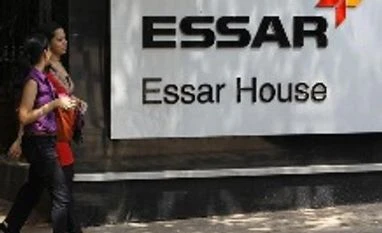
BS ReportersAgencies Mumbai Financial stress at some of the most indebted groups has begun to have a cascading effect on a global bank, which along with some private lenders have a significant exposure to stressed corporations. A clutch of lenders, including ICICI Bank, Axis Bank and Standard Chartered Bank (StanChart), have asked the Essar Group to repay its loan, failing which the lenders would consider selling down these loans. The company, however, denies having received any such communication from the banks. Standard Chartered, ICICI Bank and Axis Bank have lent around $3.5 billion to Essar Global.
According to news agency Bloomberg, these three banks have approached Russia's VTB Group to see if they are interested in buying a portion of loans that were extended to Essar Global Holdings. StanChart's exposure to stressed Indian corporations is estimated to be in the range of $20 billion. According to unverified sources, the British lender asked Essar's London-based holding company - Essar Global - to repay the loan as part of bank's plans to reduce exposure to assets in risky emerging markets. Essar denied that banks have recalled loans.
Replying to an e-mailed questionnaire, an Essar spokesperson said: "The group's model has been to invest in greenfield projects and monetise these investments at an opportune time to unlock value, the case in point being sale of our investment in telecom to Vodafone. In line with the aforesaid strategy, Essar has signed a non-binding term-sheet with Rosneft to monetise part of its shareholding in Essar Oil and likewise we will be considering similar transactions for other assets as and when they are ready to attract investors. Monetisation proceeds of such transactions will be used to pay down the Essar Global debt as and when these transactions consummate." Essar Group plans to sell its 49 per cent stake in Essar Oil to Russian oil giant, Rosneft for around $2.8 billion in an all-cash deal to bring down the debt of the holding company, said an official asking not to be quoted.
Apart from Essar Global, the group's steel company is also in the process of selling assets worth Rs 11,200 crore so that it can bring down its own debt worth around Rs 30,000 crore. The group expects to close both Essar Oil stake sale and Essar Steel's asset sale by March next year. Essar Global holds stake in port, oil, power and steel companies based in India. The company has announced to take both port and oil business private and sell stake after de-listing. Of all its businesses - barring steel - other businesses like port, oil and power are making profits, the official said.
Essar is not the only company to be caught in a debt trap. Analysts at Credit Suisse, a global investment bank, have been highlighting the risk that India's most indebted corporates pose to the banking system. In the third edition of its report titled House of Debt, Ashish Gupta writes, we find that despite attempts at deleveraging, financial stress at these (indebted) groups has intensified further.
"All the groups saw further rises in debt in FY15, which is now up 7x over past eight years to 12 per cent of system loans. Their interest cover dropped to 0.8x vs 0.9x in FY14 and debt/Ebitda rose to 7x. Moreover, while their loans are still "standard" at the banks, in past few weeks 35-65 per cent of debt of four groups (Jaypee, Lanco, Essar and GMR) has been downgraded to default by rating agencies."
When contacted, a StanChart Bank spokesperson said that they could not comment on client-specific exposures, but added that that the group had announced a number of actions to secure the foundations of the business.
"This includes managing up, out or restructuring $100 billion of risk-weighted assets - a third of group risk-weighted assets. We have also tightened our risk tolerances as we significantly improve our risk profile, including exiting $20 billion of risk-weighted assets beyond our risk tolerances."
The spokesperson also added, "The group has also said today that it will continue to take action to reduce vulnerable exposures in India, with total exposure down from $42 billion in H2 2013 to $33 billion now. Some of the measures will however allow us to continue to support the development of our Indian customers. The book in India remains primarily short-tenure. The external environment in India is quite challenging at the moment and we are seeing stress across the banking sector."
StanChart has decided to go for aggressive restructuring after the bank incurred a third quarter pre-tax loss of $139 million compared with a profit of $1.5 billion for the same period last year, An e-mail sent to Axis Bank and ICICI Bank remained unanswered.

 "Banks step up pressure on Essar Group")


 Connect with us on WhatsApp