Karnataka has directed taxi aggregators such as Uber and Ola to stop operations in the state until they secure a licence from the government, triggering sharp reactions from the corporate world.
Getting a licence would mean no more surge pricing, complying with the maximum fares fixed by the government periodically and registering with local transport authorities.
“If they have made some new rules for taxi aggregation, and the rules are reasonable without putting liabilities, it is fine. But they must not stop the business. Stopping the business means Bengaluru earning a bad name globally,” said T V Mohandas Pai, chairman of venture capital firm Aarin Capital and a prominent business leader of the city, adding, “The Siddaramaiah government will be seen as anti-innovation and anti-technology.”
Karnataka’s move comes days after hundreds of drivers affiliated to these taxi aggregators took to the streets to protest against what they called ‘harassment’ by transport authorities that have cracked down, on the grounds that these taxis haven’t followed the new norms the state announced in April.
The transport department has filed around 300 cases against drivers for not complying with the rules. Drivers have been caught in the crosshairs of the ongoing war between the state and these aggregators.
Uber and Ola had to suspend their bike taxi services after the Karnataka government said the transport rules did not have provision for two-wheelers to be used as taxis.
Karnataka, whose capital Bengaluru is India’s information technology hub and a cradle to experiment with new business models based on this, is the first state in the country to mandate a licence for app-based aggregators to operate cabs.
A note from Karnataka’s commissioner for transport, late on Saturday night, said many aggregators had not obtained a licence but were operating such cabs.
Ola had given its application as late as Saturday evening, while Uber was yet to comply with the government rules, Karnataka’s Transport Commissioner Ramegowda said on Sunday.
He said a meeting with Uber has been called for Monday and would change its stand if the US-based ride-hailing app complies with the state rules.
“Since the past two months (after the rules were notified), we have given adequate notice for them to take the licence. They have not complied,” said Ramegowda, adding, “We are neither harassing nor hindering the aggregators operations in the state. What we are saying is ‘seek a licence and operate’.”
Both Uber and Ola declined to comment on Sunday.
Ola and Uber, backed by private equity funds, have committed to spending as much as Rs 15,000 crore in India to win the country’s taxi market. They operate an asset-light business model, working to get more cab drivers to use their platform and make it easy for consumers to hail them, using a smartphone app.
The progress in Karnataka’s licensing move is being keenly watched by other states as well and might have an impact on the business model of these app-based taxi aggregators.
Maharashtra has come out with draft rules mandating digital meters, end of surge pricing and registration with local transport authorities. In Delhi, Chief Minister Arvind Kejriwal had banned surge pricing during the two-week odd-even experiment in April, which was aimed at decongesting traffic on Delhi roads.
Uber piloted its India service in Bengaluru two years ago, while Ola, which began in Mumbai, moved its headquarters to the city to tap into the local tech talent to compete with the global firm. Bengaluru, which is one of the largest markets for cab aggregators, has around 50,000 cabs running on its streets helping address a crucial gap in public transport. At the same time, the surge pricing charged by cabs during peak hours has been criticised by commuters.
“The security (of people) is the worry for the government. We have also received a lot of complaints against surge pricing,” said Ramegowda, adding, “The government is open to feedback. If the public want changes in our rules, we will accommodate them.”
| NAVIGATING SPEED BUMPS |
2015 - Oct 14: Maharashtra introduces draft rules to regulate Uber and Ola
- Oct 22: Online petition against Maharashtra rules, stating it is draconian and anti-consumer
- Oct 31: Uber runs an online email campaign, asking users in Mumbai to protest against govt
2016 - Jan 20: Karnataka clears Rs 99-crore investment in Bengaluru for Uber tech centre
- Feb 6: Uber sees outrage against surge pricing from consumers; online petition begins
- Mar 4: Uber introduces UberMoto, a bike taxi service in Bengaluru; Ola follows suit
- Mar 5: Karnataka says bike taxi service banned; Ola complies
- Mar 11: Uber opens tech centre in Bengaluru
- Mar 15: Uber suspends bike taxi after Karnataka cries foul
- Apr 7: Karnataka notifies rules for taxi aggregators; introduces licensing
- Apr 8: Maharashtra says it will follow Karnataka model to licence taxi aggregators
- Apr 15: Karnataka says it will give nod to bike taxis; mulls rules
- Apr 27: Delhi bans surge pricing during odd-even rule
- May 18: Uber withdraws UberMoto, the two-wheeler service, from Bengaluru
- May 26: Drivers protest against harassment from Karnataka’s transport department
- May 28: Karnataka tells Ola and Uber to stop services
|

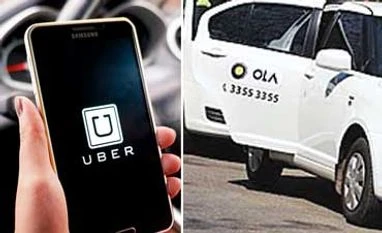 "Karnataka to Uber, Ola: Get licence or go off roads")


 Connect with us on WhatsApp