The BP board met in India through Wednesday and Thursday, its first meeting in the country. The 15-member board’s visit concluded with a meeting with President Pranab Mukherjee.
A company statement said the board members wanted “to gain an understanding of the opportunities in the country”.
Occasionally, BP holds board meetings in a significant market for the company. This year’s decision to hold the meeting in India was a clear indication of BP’s strong commitment to the Indian energy sector, the company said.
The company’s board visited Kakinada, Andhra Pradesh, the landfall point for KG-D6 gas. “We are working closely with the government of India in its quest for energy security. I am confident that, working together with our partners Reliance Industries, our combined capabilities, experience and expertise in deep water will support the efficient and cost-effective development of India’s energy resources,” said BP Chairman Carl-Henric Svanberg.
A BP spokesperson declined to share the specific agenda of the board meeting, citing regulatory norms.
In February, BP and Reliance Industries had announced a KG D6 block enhancement plan, targeting four trillion cubic feet of resources. BP said India had the potential to find significantly more oil and gas, and this required policy and regulatory support to attract investment, as well as the right technology and capability to find and develop the resources.
Along with Reliance Industries, BP, Europe’s second-biggest oil company, has been pushing for market determined prices for natural gas produced from the prolific KG-D6 block. “I have asked the BP board of directors to hold their May meeting in India so that the members can see the challenges and opportunities themselves, before they are asked to consider additional investments in India,” Bob Dudley, group chief executive, BP, had written to Prime Minister Manmohan Singh on April 15. The letter followed a meeting with Singh.
Dudley had told Singh the pricing model suggested by the Rangarajan panel would lead to prices half the international rates. If the Rangarajan panel’s model is followed, domestic rates would rise from $4.2 per million British thermal unit (mBtu) to about $8.
“If the government chooses the mid-way pricing recommendation of the Rangarajan committee, I respectfully request the government to consider...an additional price incentive of $1.5 a mBtu for deep-sea fields to compensate for high cost and exploration risks,” he wrote.
Dudley said the government should bring out a schedule of “quarterly increases over the three-year period” to move to an arm’s-length market determined price. “In the Indian context, this is represented by the landed price of LNG,” he said, adding a clear pragmatic market-based policy to move India’s gas price to the level of imported LNG would create a dynamic and powerful shift for India’s industry.

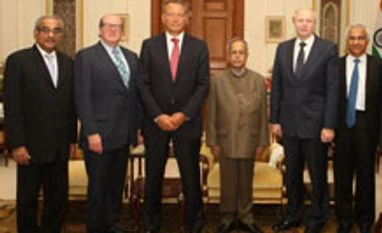 "BP holds maiden board meeting in India")


 Connect with us on WhatsApp